Class Report: ENGL 062, 7 January 2019

For the first class meeting of the session, introductions were made to the discipline, course, and instructor. The materials provided in the course shell were expanded upon, assignment guidelines were reviewed, and time was afforded to students to work on their assignments.

Students should note that, owing to the MLK holiday, campus will be closed on 21 January 2019. A WebEx meeting will replace the regular class meeting on that date; it will begin at the regular class time.

The class met as scheduled, at 1800 in Room 114 of the San Antonio campus. The course roster showed three students enrolled. Two attended; student participation was reasonably good.

An online office hour will be held on Thursday, 10 January 2019, at 1800.

Students are reminded that the following assignments are due before the end of day (Mountain Standard Time) on 13 January 2019:

  • Discussion Threads: Introduction, Reading and Writing: My Strengths and Weaknesses, and Time Management Strategies (3 posts/thread, rubric online)
  • Week 1 Quiz (online)
  • Graded Reading Activity (online)
  • Week 1 Pulse Check (online)

What Would Have Been a Sample Assignment Response

As I’ve moved into a new session of teaching, I had meant to begin developing sample assignment responses again. They seem to have helped my students in the past couple of sessions, and I do want to help my students succeed, despite what many of them seem to have thought over the past however many years I’ve taught. But when I went to look at the current session’s assignments for the first week, thinking I would get a head start on developing those new examples, I found that they are online quizzes.

blog post image

I cannot offer examples of such things. For one, I do not know how limited the quiz bank is from which the students are asked to work; were I to address questions from them, I would be giving students answers, and while I approve of giving models, doing the assignments for them passes lines I am not willing to cross. For another, I am relatively certain I would get into some kind of trouble for posting the questions directly. And were I to try to write an independent example of such a quiz, it would require more work than I am willing to do without additional compensation. (I enjoy writing essays; I find the work of doing so meditative, and I often learn things from it. Quiz-writing is much more meticulous, and while it can be remunerative, I am not likely to draw extra pay for providing supplemental materials to my already-enrolled students. I do the job because I need money, after all.)

For now, therefore, I will have to defer what should have been an example of an assignment response, waiting until next week, when actual written responses begin to be asked of the few students enrolled in the current session. Because there are few, I will be able to attend to them more closely than larger classes permit, which should be to the good for the students and for me. For when I have to assess work at speed, I find myself looking for different things than I would prefer to seek but which I can only work to uncover when I have time to spend–and that is not the case with over-enrolled writing classes that have institutional deadlines I must meet. That seems not to be an issue this go-round, and I am grateful for it. I hope I have cause to continue to be.

Can you help me keep it going once it actually starts back up again?

In Response to Justin Stover

On 4 March 2018, Justin Stover’s “There Is No Case for the Humanities” appeared in the online Chronicle of Higher Education. The article opens with the stark statement that the academic humanities are already nearly dead, offering examples of that near-death, before announcing its overall topic and framing the following discussion in terms of its strange support from the cultural right and left. Stover then addresses prevailing critiques of the academic humanities: their overspecialization, overproduction, and under-teaching. After, he lays out some historical context for the current problem of the humanities, namely that they have been supplanted by the university’s expansion into fields previously assigned to other kinds of institutions, before addressing the inadequacies of common defenses of the humanities. The article proceeds to articulate the academic humanities’ core function: the development of a common culture and class to carry it. The inability to articulate the value of that commonality outside of it is what makes for a lack of case for the humanities, and Stover notes that that lack does not mean the humanities should not be defended or that they will not last beyond the falling-away of institutional support for them.

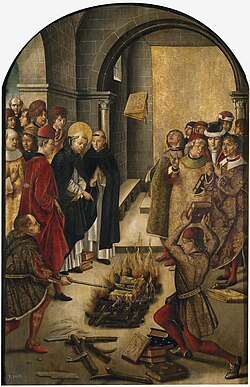
Jacques-Louis David’s The Death of Socrates seems fitting.

Before I move into more ruminative responses to Stover, I need to note a couple of things that stood out to me as I read. For one, I am tempted to read Stover’s piece against that of Bennett’s, to which I recently responded. For another, Stover makes the comment that humanities scholarship is “not written to be read, at least in the normal sense of the term”; I find myself wondering what that “normal” sense is. Later, he makes the statement that “The university can be many things, but without [humanities scholars], a university it will not be,” which seems to me to be a bit vainglorious and myopic. Admittedly, accreditation requires a certain number of humanities courses, but the relegation of those courses to adjuncts and visiting faculty–to academic expatriates such as I am–satisfies the inclusion but does not satisfy the soul, as it were. Academic and disciplinary ghettoization happen, and more in the humanities than in other places, it seems.

Those things noted, I think Stover has the right of it. Academe does tend to replicate itself, and it is used as an entree into a particular set of cultural norms, themselves emerging from historically exclusionary and discriminatory preferences and still, in many cases, reinscribing them. And it is true that those norms cross national boundaries, but they are hardly so cross-cultural as might be hoped; there is ample attestation that taking them on involves self-alienation from home cultures, and I could add mine to the litany of them. It is also true that the academic humanities need defense if they are to persist in the university, though whether or not they should is another matter. Movements toward open-access and decentralized work, increasing numbers of academic expatriates who have found no room for themselves within the transnational culture of academe but who still want to contribute to a field from which they feel themselves to have derived benefit and purpose, suggest that the institution is not so necessary now as it was–but only relatively recently was.

It is further true that the humanities cannot justify themselves outside themselves, no less so than theologies require belief to justify themselves, and systems of law, and other human endeavors that Stover mentions. And I might note that faith in such things is diminishing no less than faith in the value of the academic humanities. If the humanities are framed as being in need of defense, it is clear that they–and other fields, to be sure–are losing and are likely to keep on doing so. If they have made promises, they have failed to meet them. They have lied, and to many people over no small amount of time, and it is not unfitting that liars suffer for what they have said wrongly.

Help me move ahead!

In Response to Eric Bennett

On 13 April 2018, Eric Bennett’s “Dear Humanities Profs: We Are the Problem” appeared in the online Chronicle of Higher Education. The article opens with a summary of the progressive work done by humanistic academic study before pivoting into the assertion of its title and glossing disciplinary history from the First World War onwards. The decentering and deconstruction of literature from the 1970s on receives substantial attention as leading to the effective expulsion of humanities scholars from civic regard. Bennett returns to the 2016 elections for an example of the uselessness of humanistic self-disinvestiture before moving back into an explication of historical circumstances that once empowered humanistic study and on into a critique of new media and its studies. He then proceeds to posit a corrective, of which much seems to be a return to older norms of scholarly conduct and intention that ultimately reads as somewhat naïve.

It’s another where the picture comes from the article underlying the piece.

I do not know what I expected to get out of reading the piece, honestly. Perhaps I looked at it initially from a sense of Schadenfreude, a delight in the misfortunes of a community that I sought to enter and by which I was more rejected than not. (I acknowledge that there are many ways in which I remain quite bitter. It is not good for me, to be sure, but I have been more bitter than the coffee I drink for nearly as long as I’ve been drinking it; I don’t know who and what I am without it anymore, or even if I have a who and what I am without it. But that is a rumination for another time.) And there is some irony to be found in people ruining a thing in an attempt to save it, as well as in neglecting historical underpinnings while interrogating them. For my erstwhile colleagues are not wrong to note that the things set up as bulwarks were set up to protect particular things and people–and not others. And they are not wrong to note that maintaining such systems also maintains the discrimination upon which they are established. But neither is Bennett wrong to note that moving away from them has had consequences many who work to dismantle the objectionable find objectionable. We cannot be surprised at a disregard for fact when so much work has been done to question the nature of fact–or we should not, since it is clear that many are.

Perhaps I actually looked for some kind of solution to the problem presented. Bennett seems to be arguing for a return to older ideas, which is problematic for a number of reasons. One of them is that those older ideas do contain and reinforce various discriminations that should not be in place. It is true that any judgment will necessarily discriminate, and I do not think Bennett is wrong in concept; there are things that are to be decried, although determining the point at which they become so can be somewhat fraught. (For one example relatively close to home for me, formal English is moving away from the inclusive masculine, the assumption of “he” as the default pronoun, yet, to my knowledge, formal Spanish retains the construction. Mixed groups are referred to in masculine declensions–though Ustedes is a thing. So does it become necessary to decry the construction, or is it necessary to allow another culture to retain its norms?) But that very fraughtness, which is good insofar as it demands that people think on things and reflect, works ill in that it works to allow for the kind of shenanigans seen too often in current political offices in the US and elsewhere.

Also problematic is the fact that the older models are unpalatable because they are older and slower. Some few are able to take the time to reflect and consider, true, but far more are enmeshed in the brutal demands of daily living, working as they can to scrape together what they can so they can last into the next day and do it all again. It is a Maslovian concern; many people cannot devote the time to thinking through things that they need to think through because they have to devote all their time to staying alive, without which no discernable thought occurs. At the end of a long working day, insofar as I have such things, I seek ease and solace, not the challenge and rigor of thinking through things. The stack of reading beside my bed speaks to that. Yet I am trained to do that very thing. So if I reject doing it when I am tired, I can hardly blame those who are not trained as I am for turning away from it when they are tired–and I know that many are perpetually tired; again, they are worn down from daily life and its demands, so they can hardly but be.

(I do not mean to excuse people from their misdeeds. Tired as many are, they still actively work to ill in the world, and that is not something that should be lauded even if there are other things about them that should. But I know I contribute to suffering, as well; I do not exempt myself from such condemnation. And I am unwilling in my present circumstances to take the risks that extricating myself from at least some of the complicity would entail. So there is that.)

Whatever the reason I looked at the article, though, and whatever problems the solution towards which Bennett gestures has, the idea of the title is one worth considering. Those who have studied the academic humanities–often with literature standing as metonym for the broader group of fields, which is its own problem–have done much to make themselves less than amenable to public understanding and sympathy. We–and I am among the group even now, as seems fairly obvious–put ourselves outside the world even more strongly than the traditional town and gown divide would have it, in part because there is less overt a connection between what we do and the parts of people’s lives that help them to survive than between them and other fields, and Maslovian logic holds, at least in part. And I do not know how to address the matter; I have no more workable solution than Bennett. Perhaps the solution is to let the institution die and, in its fall, open up space for something new to grow that might well be what we need.

Help me start the new year right!

Reflective Comments for the November 2018 Session at DeVry University

Continuing a practice I most recently iterated at the end of the September 2018 session at DeVry University, and following closely the patterns established in previous practice, comments below offer impressions of class performance among students enrolled in my sections of ENGL 135: Advanced Composition and ENGL 112: Composition during the November 2018 session at that institution. After a brief outline of each course and selected statistics about it, impressions and implications for further teaching are discussed.

ENGL 135

Students enrolled in ENGL 135 during the November 2018 session were asked to complete a number of assignments in quick succession. Many, and the weightiest, related to the overall course project; others were homework meant to practice skills used in the workplace and in later stages of the course project. Those assignments and their prescribed point-values are below, with relative weights shown in the figure below:

ENGL 135 Grade Breakdown November 2018

  • Course Project
    • Topic Selection, 50 points
    • Research Proposal, 50 points
    • Annotated Bibliography, 100 points
    • First Draft, 70 points
    • Second Draft, 80 points
    • Presentation, 100 points
    • Final Draft, 170 points
    • Career Planning, 50 points
  • Discussions, 280 points
  • Homework, 50 points
  • Total, 1000 points

As before, most assignments were assessed by means of rubrics provided by the institution or amended from them for ease of use. Some few were assessed on a percentile basis from standardized testing conducted as part of University-wide course requirements.

The section met online, with office hours generally taking place Monday evenings at 6pm Central time. Its overall data includes

  • End-of-term enrollment: 18
  • Average class score: 730.925/1000 (C)
    • Standard deviation: 210.112
  • Students earning a grade of A (900/1000 points or more): 5
  • Students earning a grade of F (below 600/1000 points): 3

Numbers of students receiving each of the traditional letter grades are indicated below:

ENGL 135 Students by Grade

Comments about the session will follow in Impressions and Implications, below.

Return to top.

ENGL 112

Students enrolled in ENGL 112 during the November 2018 session were also asked to complete a number of assignments in quick succession. Most concerned a series of short papers, presented in planning sheets before submission as full essays; a final essay additionally went through an intermediate draft before final submission. Those assignments and their prescribed point-values are below, with relative weights shown in the figure below:

ENGL 112 Grade Breakdown November 2018

  • Papers, 690 points
  • Discussions, 310 points
  • Total, 1000 points

Assignments were assessed by means of rubrics provided by the institution or amended from them for ease of use.

The section met in Room 111 of the San Antonio campus Wednesdays at 6pm, with office hours generally taking place Monday evenings at 6pm Central time. Its overall data includes

  • End-of-term enrollment: 9
  • Average class score: 610.9611/1000 (D)
    • Standard deviation: 299.4946
  • Students earning a grade of A (900/1000 points or more): 0
  • Students earning a grade of F (below 600/1000 points): 2

Numbers of students receiving each of the traditional letter grades are indicated below:

ENGL 112 Students by Grade

Additionally, since the class met physically, it was possible to take attendance. All students in the section missed at least one class meeting; some missed quite a few more, as indicated below (with the figure being classes missed, students missing that many classes, and percentage of students falling into that category):

ENGL 112 Students by Absence

Comments about the session will follow in Impressions and Implications, below.

Return to top.

Impressions and Implications

I confess to feeling some dismay at the lower performance of the November 2018 session against the September 2018. While ENGL 135 had more A-earning students than its earlier counterpart, it also had more students fail–and ENGL 112 had no students earn overall As, though it also had students failing. In each case, the lower grade was due to non-submission; many students got many zeros for work because they simply did not submit it. I have to wonder what else I could have done to chivvy them along.

Matters were complicated by a data loss I experienced late in the session. I typically keep my teaching notes and materials in a USB drive; the one I had been using ceased functioning. In retrospect, I had some indication that such would be the case, and I did not act upon it; I suffered as a result. Student grades were not affected; those I had recorded in the school’s system remained in place, as did my comments about them, and materials I had uploaded to this site also remained in place. Still, having to reconstruct information at the speed I did did not make things easier for me. How it affected my students is not as clear.

I feel, however, that my earlier-noted resumption of example-writing was helpful for my students. At the very least, I know that people were looking at the examples I posted; I have access to readership statistics, so that, while numbers were not as good as they were in August, they were still generally up. Enough students’ work mirrored the examples that I am confident some of the lessons made it through, which is good. Unfortunately, I am not teaching either ENGL 135 or ENGL 112 in the coming couple of sessions, so the examples will be let alone for a bit–though I mean to continue the practice with the next class I teach.

Moving forward, I also mean to follow another practice that I had in place for ENGL 135 but not ENGL 112. In my record-keeping, I more narrowly divided storage and commentary for the former than the latter; it ended up making grading easier and commentary clearer, despite having more assignments and more students in Advanced Composition than Composition. Though it requires more initial work from me, it makes for less work while I am amid work; I think I’ll continue to do it.

At the end, though, I am glad yet again to have had yet again the chance to teach, and I look forward to having it at least one more time as I move forward.

Return to top.

Initial Comments for the January 2019 Session at DeVry University

I have been offered a class for the January 2019 Session, a section of ENGL 062: Introduction to Reading & Writing, and I’ve accepted the assignment. It’s a class I’ve taught several times before, though it seems to have changed a bit for the upcoming term. (That’s good, because there were some things that needed adjusting, but it does also ask me to re-learn some things. But that’s also to the good.)

It can be a fun thing, indeed.
Image from Giphy.com.

I am likely to continue to offer samples of the work I expect my students to do, as I have noted that the students in classes where my examples are ready to hand do better on the tasks assigned them than those who were not. Too, I’ve not generated examples for the introductory students yet, and it can easily be argued that they are in the most need of additional assistance; I have been lax in not doing so previously, and I will address the lack. And it will help me negotiate the changes that have gone through since I last taught the course, which is also set to be to my benefit and my students’.

The class is set to meet in Room 111 of the San Antonio campus on Mondays at 6pm, beginning on 7 January 2019 and running through 2 March. It’s scheduled to run until close to 10, but how much of that gets taken up will depend on enrollment; keeping two students in for four hours is a bit much. And I will have to negotiate the MLK holiday, which will interfere with the class meeting. But that will be a relatively minor challenge–I already have plans in mind for how to proceed–and I am happy to be once again in a position to face it, to do again what I have long done and even longer trained to do.

In Response to Brian Rosenberg

On 4 December 2018, Brian Rosenberg’s “Actually, Academe Never Was All That Great” appeared in the online Chronicle of Higher Education. The article invokes New York Governor Andrew Cuomo’s August 2018 misspeaking about the lapsed greatness of the United States as a way to frame a more nuanced position–that some people miss a time that was far from great for a great many people–that it then applies to academe. It then presents a number of examples of exclusionary practices that were prevalent and emergent in the putative golden age of the academy before noting that many of the same forces and tendencies that underlie academe now are those that undergirded it then. The same social forces remain at work, the article holds, so addressing the problems of colleges and universities without addressing those social forces as well is folly.

The image is from the article to which I respond. It seems appropriate.

My experience aligns largely with Rosenberg’s assertions in the article. Academe is a (somewhat slowed) reflection of popular, public culture, moving lethargically as any organization does that is administered by those who have lifetime appointments or placement in systems that might as well be so. There is, despite the protestations of open minds and willingness to critically reflect, an ongoing privileging of those who are already in the system and a reticence at administrative levels to interrogate and, possibly, change things until and unless forced to do so. Some of that, of course, is the result of colleges and universities in the United States, generally, being beholden to the machinations of government; at public schools, particularly, legislative dicta overdetermine policies, and legislatures remain in large part bastions of cronyism and nepotism. The systems in place favor those who have experience with the systems already, so matters tend to perpetuate themselves.

And it is true, too, that matters have not always or often been good for large numbers of people in academe. I remember one year during my undergraduate days when the only professors on campus who were denied tenure–and not at the departmental or College level, either–were homosexual men, for example. I remember any number of other times when those who were connected somehow got better opportunities than their peers who produced more work and more favorably received. And while I know the adage that the plural of anecdote is not data, I know also that I am not alone in having such stories (but others’ are not necessarily mine to share). I believe those with whom I’ve spoken about such matters, who have consented to share their experiences with me. I know that there have been many who have been told that they do not belong, not because they did not belong in terms of academic ability (though there have been some who did not who were told so), but because they did not “belong” in the purported social structure being replicated by the university. (And there have been some who were accepted who did not have the academic heft even to ask. It is a fraught issue and an unpleasant one to think upon. But, unpleasant as such thoughts may be, the experience of that forcing-out and “normalizing” has to be worse.)

Help me spread good words this holiday season!

Class Report: ENGL 112, 19 December 2018

Class was given over entirely to the completion of eighth-week work: student evaluations (if not yet done) and the reflective postscript. It met as scheduled, at 1800 in Room 106 of the San Antonio campus. The class roster listed nine students enrolled, a decline of one from last week; four attended. Student participation was reasonably good. An online office hour was held on 17 December 2018; no students attended.

Students are reminded that the reflective postscript is due online as a Word document no later than the end of day (Mountain Standard Time) on Saturday, 22 December 2018. The session closes at that time, so no late submissions can be accepted.

Reflective comments are forthcoming.

Sample Assignment Response: A Reflective Postscript for ENGL 112 at DeVry University

To conclude from earlier work (here, here, here, here, here, here, and here), I will carry out the assignment my students are asked to complete for their final week of the session: a brief reflective postscript. Considering work that has been done and what work is yet to be done is a useful thing, and I nourish the hope that the example I might offer will help my students and others do find such use in their own work.

Memory is a tricky thing.
Image from Psychology Today.

For the exercise, students are asked to address a series of University-provided prompts in short paragraphs that should total some two pages of text when typed in double-spaced 12-point Times New Roman on letter-sized paper with one-inch margins. The prompts ask students to consider their work and advancement during the course, especially as pertains to the commentary essay of the last few weeks of class. It is a fairly common exercise, both at the University and in colleges more generally, so it is likely students will encounter it again–and, as noted, reflection is good practice, in any event.

For my own work, I began by setting up a document in line with the expressed formatting standards. That done, I copied the prompts over from the University into the document, highlighting them in green so I could easily see what I would be addressing and would remember to delete the copy-over before completing my work.

At that point, I moved directly into drafting my responses, considering my answers to the questions posed as I went along. The questions are open-ended, but not so open-ended that they demand much delimiting. As such, answering them proved relatively easy to do–which makes sense, given the time I’ve spent on the project reflected upon and its topic.

The content made ready, I deleted the imported prompts and reviewed my document for style and mechanics. After making the adjustments that needed making, I put the document into an accessible format, which I present here: G. Elliott Sample Reflective Postscript. May it and its predecessors prove of benefit now and in time to come!

This session’s done, but other classes await; help me help them, too!

Class Report: ENGL 135, 17 December 2018

Following up on the previous report, students were asked to comment on issues of design for their final papers (focusing largely on images and their integration into the text), as well as concerns of APA formatting. They were also asked to complete and submit their final papers; the present week asks for reflection on their work and its connection to their future plans.

The course roster showed 18 students enrolled, one fewer than last week; 16 participated in online discussion during the week. No online office hour was held on Monday, 10 December 2018, owing to other concerns.

Students are reminded that an office hour is scheduled for tonight, Monday, 17 December 2018, at 6pm CST. Students are also reminded that the following assignments are due before the end of day (Mountain Standard Time) on Saturday, 22 December 2018:

  • Discussion Thread: Looking Ahead
  • Course Project: Career Connections (due online as a Word document)