Read the previous entry in the series here. Read the next entry in the series here.
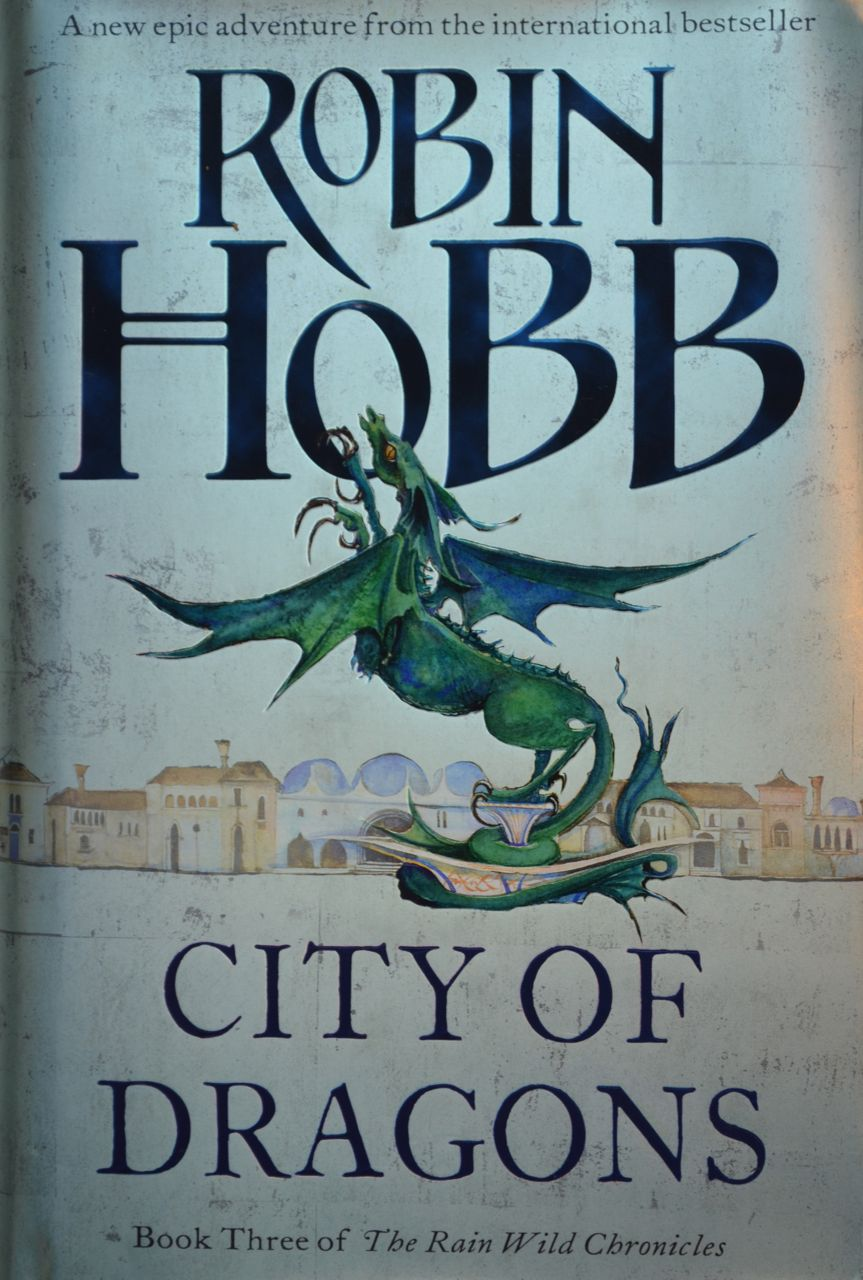
The third volume of the Rain Wilds Chronicles begins, as do the first and second, with a cast of characters–the keepers and their dragons, people from Bingtown, the crew of the Tarman, and assorted others–before presenting a prologue. Said prologue, titled “Tintaglia and Icefyre,” focuses on the eponymous dragons as they fly and hunt together. Tintaglia assesses Icefyre as they return to a familiar landing-place, and they are ambushed as they alight. The attack fails, although it startles the younger dragon and injures her.
More or less the cover I have… Image from Jackie Morris’s website, here, used for commentary
In the wake of the attack, the dragons confer, Tintaglia noting her inexperience with assault from humans. Icefyre opines on previous experiences and ancestral memories of such attacks and their effects, and he notes that he and Tintaglia will have to depart the area for a time–but not until they have eaten their fill from among their slain attackers. Tintaglia initially balks, and she questions one survivor. From him, she learns that the Duke of Chalced has prompted the attack, and Icefyre eats him for his trouble.
This will not be the first time I’ve written about City of Dragons, of course. In addition to occasional references in papers I’ve written for presentation, I reviewed the novel (for what all that’s worth) in another webspace I formerly maintained (find the review here), not long after it hit print, back when I had time to sit and chew through a novel in a day and write about it with daylight to spare. Certainly, there are things I miss about that part of my life, even if I did not recognize at the time the privilege I had then. That said, I am in a better place now than I was then, although it’s not the place I thought that I would be when I thought then about where I might be now.
I am struck once again by Hobb’s ability to write non-human intelligences sensibly, something that features throughout the Elderlings corpus. Admittedly, there are limits; Hobb is, to the extent of my knowledge and the public disclosures I have seen, human, and so there will be only so much of the nonhuman that she can depict. But the fact of presentation is something that continues to stand out to me, as does the believability of the same.
I note, too, that the prologue pivots into something that has been glancingly addressed in the earlier volumes of the Realm of the Elderlings corpus: Chalced. The repeated comment that “Sooner or later, there is always war with Chalced” comes to mind; the war seems to be coming. That the Chalcedean ruler is styled Duke speaks to it, as well as presenting an interesting implication for the Six Duchies; “duke,” of course, derives from dux, a Latin term for a high-ranking military leader, but in the Six Duchies, the Dukes are subordinate to a crowned King…
There will be a lot to do with this book. I look forward to doing it.
That school is out of session for many does not mean there’s not more writing to do– writing with which I can help! All human-written; no AI! Fill out the form below for details!
Read the previous entry in the series here. Read the next entry in the series here.
Following a message-exchange in which the topic of marriage appears to be broached between Erek and Detozi, the final chapter of the novel, “Kelsingra,” begins with Alise taking dictation from the returned Rapskal and assessing the youth as she does so. That the party has come near to Kelsingra is noted.
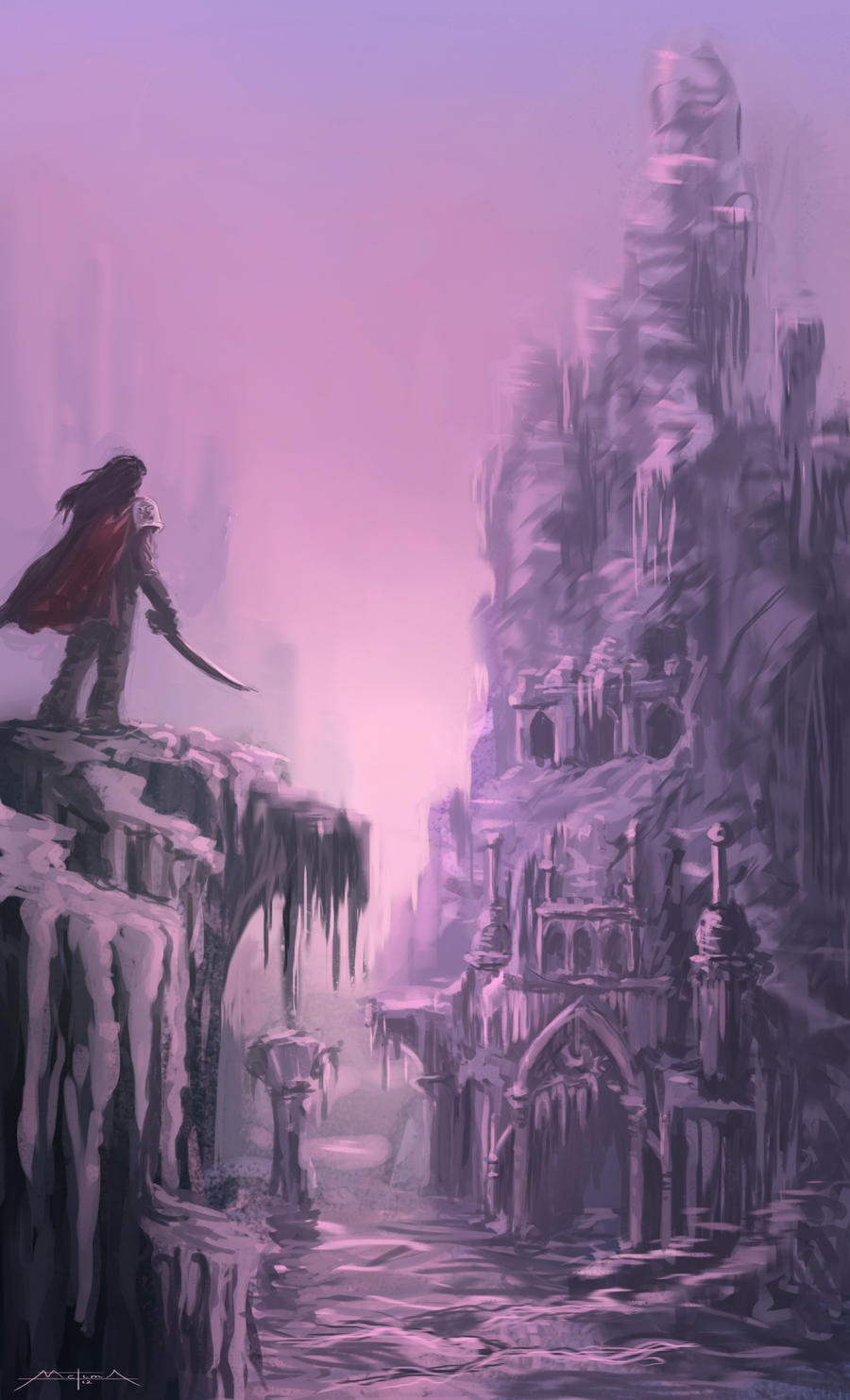
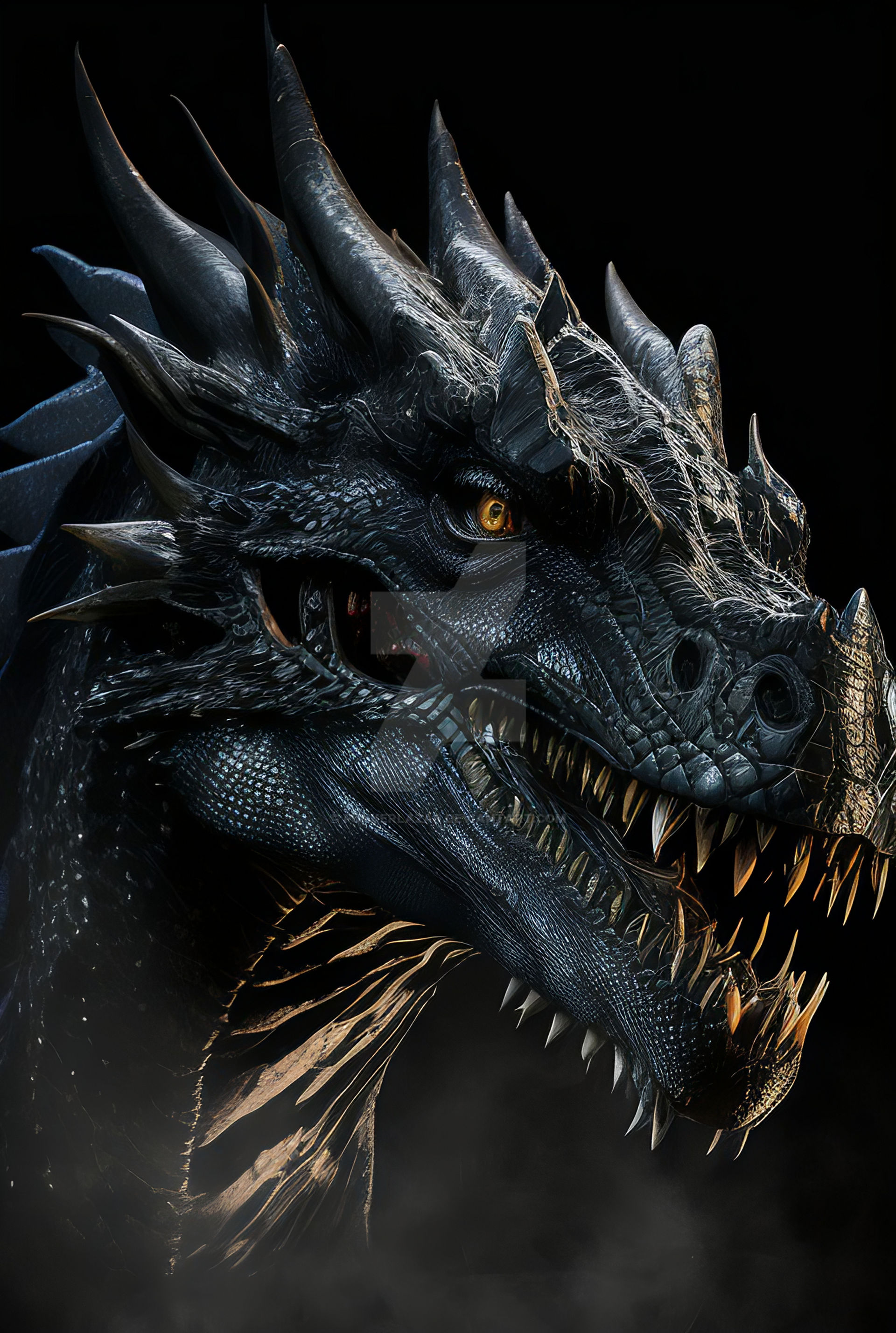
It returns from before and before! It’s still Frozen History by MeetV on DeviantArt, here, used for commentary.
The progress of the dragons, their keepers, the Tarman, and the crew of the same from the meeting with Rapskal to the outskirts of Kelsingra is glossed, being a laborious process of several days. Weather and darkness hindered the beginning of the resumed journey, but Heeby and Rapskal urge the others onwards, and the group comes to the opposite bank of a river across from Kelsingra.
Alise notes her motives for writing Rapskal’s report, and she assesses the changes that have occurred in the youth along with the party’s situation. Alise prompts Rapskal for more details, which he gives, elucidating his time from his loss to his rejoining the group. Her also notes, briefly, some of the status of the city, exciting Alise and frustrating her, as she cannot yet reach the city. After Rapskal rejoins the other keepers, Alise and Leftrin confer about him and the implications of their arrival at Kelsingra. They plan for their futures together, short-term and longer, and Leftrin’s mind reels with possibility.
Elsewhere, Carson and Sedric confer after having attended to their dragons. Carson purposes to teach Sedric to hunt, but Sedric demurs and distracts Carson with other matters. Meanwhile, Thymara muses on her situation and confers with Tats about how matters stand. Tats voices some dissatisfaction with that status, and he asks to see Thymara’s nascent wings. She reluctantly accedes to his requests, amid which Rapskal joins them. Tats attempts to deflect Rapskal, but the latter persists in urging Thymara to develop her wings as Heeby had done, offering to help her with them. And Sintara makes a test of her own wings, surveying them and taking to the air.
Formal announcement of the betrothal of Erek and Detozi concludes the novel.
It is always a pleasure to revisit such things as the image above and the references in its caption. In a sense, it is like calling on an old friend after a time away, both having changed and both taking the time to catch up. Indeed, one of the pleasures of working on this rereading series, even if haphazardly and intermittently as has been the case for me, is in that revisiting. I see different things, I think, in each reading, and the differences in what I see are a way for me to track the differences in myself from myself. I like to think that I continue to grow in more ways than the horizontal across the years, and I believe that I can look in my journals for some of how I viewed the novel when first I read it, more than ten years ago. I do recall the delight in seeing the novel on the bookstore shelves, calling to me from between hard covers. And that much remains a pleasure, when I find it again.
Less pleasant are the overtones of the interactions among Thymara, Tats, and Rapskal in the chapter. Again, I know the latter two are adolescents, and it is inappropriate to expect adult thoughts from those whose brains are presumably not fully formed–both because of the continued development of the brain into the 20s and because of the changes being effected by the dragons on their keepers. But that does not make Tats’s impositions less impositions, and it does not make the discussion between Tats and Rapskal about Thymara less insulting, as if she is not there herself and not at least as much in command of herself as they are of themselves. Once again, Thymara is treated in a proprietary way, something that has been a problem throughout the text–and which, unfortunately, contributes to its versimilitude.
For it is the case, often, that the bodies of girls and women are not considered to be fully their own, but to be governed and in some ways owned by the boys and men with whom they must interact. Even when, as Thymara, they make such efforts toward modesty as circumstances allow, and when they make clear and explicit that they are not entertaining romantic or intimate interest, they are overridden, overruled, overborne. Such interactions as are on display in the final chapter of the novel may seem innocent enough; I certainly remember a time in my life that I would have regarded them as such. But, again, I like to think that I have grown, and part of that growth is a recognition that such things–such things as I might well have done in my younger years, perhaps, had I had the chance to do so, rather than having been stymied by my own situations–only seem innocent to the guilty.
I know that a variation on Bellisario’s Maxim or the MST3K Mantra will likely be trotted out in response to such comments. (Yes, I cite such sources. Why not?) It is “just a fantasy novel,” after all, and despite my abortive attempts to make a career of compiling insightful commentaries on it and its like, there is something silly about getting up in arms over such a work. It is a remarkable position of privilege that lets me spend my time on this kind of thing rather than having to scramble to gather together enough calories in a day that I and my family don’t die, or gathering in enough money that we have a decent place to live. I know that, and better than a great many.
But.
The art we make reflects who and what we are. What gets put into the world reflects the artist; what gets distributed reflects understandings of broader cultures; what gets read and re-read reflects the reader. (And if it doesn’t get read or re-read, it still offers a reflection.) The novel is a novel, but the novel exists, the series exists, the very genre of novel exists because it says something to us about us and the world in which we live, even as it portrays a world distinctly not our own. Just as many will lean in towards a mirror to see if that is, in fact, a pimple beside their nose or some other blemish spreading across their cheek, I can look more closely at the text to see what flaws of mine it shows me, to see the ways in which the thing reflected is marred–or, as the case may well be and often is, to see the beauty that is there to be found.
Reading Dragon Haven again has helped recall as much to me.
Hopefully, it won’t take me so long to get through the next one!
I’m happy to write to order for you–a genuine human product with no AI involvement. Fill out the form below for details!
Read the previous entry in the series here. Read the next entry in the series here.
After more expressed concern from Bingtown about Sedric and Alise, as well as the ongoing exchange between Detozi and Erek, the penultimate chapter of the novel, “Mud and Wings,” begins with the Tarman running aground, the waters grown too shallow to float the old liveship and no clear current emerging from searches for the same. Leftrin sourly surveys the situation, discussing things with Alise as he reviews events. Reports of Greft’s death diminish morale, and Alise notes changes in the dragons. Leftrin announces that he will make a decision in the morning, and the crew tucks in for the night.
In Alise’s quarters, Thymara and Sylvie confer, the former asking the latter to examine and tend her back. The state of Thymara’s nascent wings is detailed, and Thymara urges Sylvie to keep quiet what she has seen. Sylvie agrees to wait only a day before taking it to Bellin.
Sedric calls upon Alise as she cooks dinner and reviews her notes, asking to speak with her. Alise rehearses her reassessment of her life in Bingtown with Hest, and she brusquely agrees to hear him out. Sedric confesses more of his perfidy with Hest and the Chalcedean dragon-parts traders. Alise commiserates with Sedric about Hest, and the two reconcile.
Thymara muses over the changes going on in her body once Sylvie leaves, and she makes to confront Sintara about them. The dragon exults in the process at work in Thymara, noting that she is being made into an Elderling–and admitting that the changes were not initially intended. Some of Sintara’s insecurities emerge as she rails at Thymara, and the commotion attracts the attention of the other dragons. Mercor urges calm, Spit violence, and further upset is interrupted by the unexpected return of Heeby and Rapskal, aloft, announcing the proximity of Kelsingra.
There is much I might point out in the present chapter. It is possible, if perhaps something of a strain, to read them as mimetic of transitioning, although I am assuredly not informed enough about such things to offer any kind of insightful commentary thereabout. (I might note, however, that it seems to run athwart of other parts of the author’s work, as Roberts attests.) It is also possible, and probably a stronger argument, to read the changes the keepers are undergoing as allegories or analogies to puberty, especially given the ages of many of the keepers and the pregnancy remarked upon among them.
The puberty-reading works well in part because of structural concerns. I’ve noted before, here, that the novel has somewhat of the Bildungsoman about it; I’ve commented, also, that other parts of Hobb’s corpus have spoken to such concerns (here and here, for example). There are possibly other places I have, and there are definitely other places I likely ought to have, made such notes–and that they were available for making at other points in the corpus and in the novel means they are possible, if not likely, in the present chapter.
It has been a while since my own pubescence, as might well be imagined, and, as also might be imagined, my memories of the experience will be somewhat occluded by that time. But I do recall that much of my experience was determined by things other than my choice. Forces beyond my control acted upon me to occasion changes in my body that were confusing and distressing at the time, and I am given to understand that the process is more…intense in that regard for those born with ovaries / uteri. (Having not directly experienced as much, I must rely upon the reports others who have have made to me, but I trust those who have made such reports to me.) Teasing out any metaphor is, of course, conjectural and conditional; all metaphors fail at some point (which is good; I’ve used that failure repeatedly in the freelance work I have done). But I think I may be on some solid ground with this one.
It’s not the only reading, of course. But it is a reading, and that is good enough to get started again.
Remember, I’m here to provide you made-to-order, hand-crafted, non-machined writing! Fill out the form below for details!
Read the previous entry in the series here. Read the next entry in the series here.
Following additional messages in the ongoing exchange between Erek and Detozi, these detailing the openings of formal marriage proceedings, “Gone Astray” begins with Thymara rousing on the deck of the Tarman to find herself and the ship out of the woods, somewhat disconcertingly for someone who had grown up in a tree-borne city. Process towards Kelsingra and the current state of the dragons and their keepers are rehearsed, and changes to Sintara are detailed. Thymara’s own aches, pains, and changes also receive attention. Several keepers approach Greft for the use of his gear, which he denies, though to no avail. After a tense exchange, Thymara retires.
Leftrin considers the increasing peril for the Tarman and his crew as the group proceeds past what can properly be called a river, and he guesses at the geography that has led to the creation of the region in which he now travels. More of the local environment is described, and the dwindling supplies available receive attention. Alise joins him, and they confer about their situation. The pair affirm their mutual love, and their conversation turns awkward afterward, taking in Greft and his situation.
Leftrin and Alise walk the deck together, and Alise muses on the changes that have occurred in her. It is noted that Greft has taken his boat, as well as much of the hunting gear and no small part of the ship’s supplies. Given the theft from ship’s stores, Leftrin dispatches Carson to retrieve Greft. Carson asks Sedric to accompany him, confusing the latter, who muses on the shifting shape of their relationship. Carson and Sedric confer about their mission and the situation that obliges it, and they reaffirm their affections.
Meanwhile, Jerd experiences some difficulties with her pregnancy, occasioning some concern from the Tarman as blood hits the deck. Consultation with women on the crew notes that Jerd is likely experiencing a miscarriage and that those who have been engaging in sexual escapades are fools for doing so without the assurance that those who can get them pregnant will stand by them when hardships come. The rebuke is lengthy and detailed, and Jerd is delivered prematurely of a stillborn baby who is taken swiftly away and put overboard. Thymara considers the warning given, and Jerd’s dragon consumes the dead child.
Carson and Sedric proceed in their pursuit of Greft, backtracking under Carson’s honed skills. Gallators think to make meals of them, only to be eaten in turn by Spit. They find that Greft has not fared so well, but has been attacked by the gallators and left to die. Carson eases his passing, and Spit eats the body after it has been relieved of what few valuables are upon it. Sedric is confronted by evidence of his perfidy, purloined by Greft and found by Carson, and he confesses himself to his lover. Discussion turns pointed between the two, and Carson urges Sedric to confess to Alise.
The present chapter opens in another passage that serves to affirm, at least for me, that the setting of the Elderlings novels is more North America than Europe. The “gallators” Thymara and other keepers note encountering are reminiscent of alligators in name and described behavior, for one; the regions through which the Tarman passes call to mind such places as the Florida Everglades and the Louisiana wetlands (hence the image for this post). Other novels have, of course, offered other clues–the presence of raccoons is one that comes to mind–but as I was rereading this chapter, I was struck by it once again. There’s a comfort in being reminded that ideas you had were good ones.
That recognition brings to mind what seems to me to be a strange thought. The Traders were, as is noted early on in the Liveship Traders series, effectively exiles from their former homes in Jamailllia. (There’s more about that in some supplementary materials I will address in time, but I need to get through the “main” rereading first.) The Rain Wild Traders from whom the keepers are drawn are very nearly exiles from even the rest of the Traders. I have to wonder if there is some attempt at mirroring or borrowing from the history of the Cajuns in the United States; to my inexpert eye, exposed only cursorily in my few short years of study at the University of Louisiana at Lafayette, there seem to be some parallels, though I am well aware that my opinion is not the most informed that could be found. Still, I wonder if any of the future alumni at the school might be able to explicate that further. (I’d love it if you did and let me know!)
The discussion of the consequences of sex–more for women than for men–also provokes thoughts in me. I know that some of the discussion is entirely true to life; there’s a reason “Mama’s baby, Papa’s maybe” is a current phrase, and I have seen all too many children abandoned or worse by one or more of those who made them, all too many women who became pregnant and remained pregnant and were not aided in it by those who made them pregnant. (And that leaves aside questions of consent, which are many and almost certainly beyond what it is fit for me to address.) It is the case that people who can act as adults–and the keepers, having entered into contracts, seem to be in that place by the standards of the society in which they were reared, so there is at least that much to say–should act with thoughts towards the consequences of their actions. But it is also the case that consequences fall unevenly upon those who act, unfair as it is (and as the narrative, to its credit, makes explicit).
Too, as I continue to read with affect, I cannot help but note that my own daughter approaches the time in her life where such concerns will be hers to consider. She is not there yet, but she grows closer to it, some of it at her own insistence. I hope that, when the time comes, she will not need such harsh reminders. I fear, though, that she will, or that circumstances will conspire to strip that agency from her. The world is as it is, as is the part of it in which we live, and while there is much to commend that place, there is also much of pronounced concern, especially as regards such things…
I do not think I am wrong to worry about my (still-) little girl.
Like how I write? Want me to write for you? Fill out the form below!
Read the previous entry in the series here. Read the next entry in the series here.
Another message in the ongoing exchange between Detozi and Erek sent along with official business between Traders’ Councils precedes “Changes.” As the chapter begins, Sedric paddles and considers the changes going on in him, on which Carson remarked the night before. Their conversation about those changes is rehearsed, and Sedric mulls over the need to keep parts of himself hidden from his lover. Relpda intrudes upon his reverie, noting the coming of changes.
Sintara muses over her current situation and that of the other dragons with her. The changes going on in her own body please her. The changes going on among the keepers do not, and she looks on as Mercor and Kalo summon the keepers to attend. The dragons’ actions provoke ire from Leftrin at the treatment of the Tarman, and Kalo demands a keeper to replace Greft. A scuffle among the dragons breaks out, which Mercor swiftly subdues. Discussion proceeds, more calmly but not without tension, and Carson’s nephew, Davvie, volunteers to the task of keeping Kalo, and Carson finds himself conscripted to aid the belligerent Spit. Sintara considers the changes occurring in Thymara, finding herself startled at some of the particulars, and determines to guide their further course. The dragons set out, compelling the rest to follow.
The dragons are long noted in the Elderlings novels as being mirrors to humans, the Fool making the parallel explicit more than once. If that is the case, and if, in a more “literary critical” sense, the dragons are metaphors for (certain) people, then I have to wonder what comment is being made with the casual assumption of authority over humans on the dragons’ part. Admittedly, it is persistent throughout the Rain Wilds Chronicles–and in earlier Elderlings novels–but it seems more prominent at present than elsewhere, with the offhanded consideration of eating Greft and the assertion that new keepers will make themselves available to the dragons. There are reasons for the new keepers to agree, of course; desire and fear are powerful motivators, as no shortage of advertising demonstrated. But even so, there is an arrogance in the dragons that…I wish I could say I see it rarely in the world around me and the people in it.
My wishes are many. Not many are granted.
It will, of course, be the case that some will complain of striving toward such a reading. “It’s just a story,” some will say. “Why do you have to make it political?” or some other purportedly objectionable thing. The thing is, though, that I’m not making it any way. The words are on the page, whoever reads them. All of us who do read, though, approach the text from the perspective/s we inhabit, and those perspectives emerge from our own orientation. When I had students, I explained it to them as a combination of where we’re from, when we’re from, and who we’re from. Even if we place ourselves into the positions of other, we do so only to the extent that we are able to imagine those positions, and those imaginings are themselves constrained as we are. And, all of those constraints reflect the circumstances in which we have lived; they are all necessarily already political, whether in terms of party alignments, demographics, ideological orientations, or other factors.
Reading is always a communal act. Any community will necessarily have “politics.” The questions become whose are reflected and in what ways.
Like how I write? Want me to write for you? Fill out the form below!
Read the previous entry in the series here. Read the next entry in the series here.
A trio of missives coming in rapid succession note the concerns and lack thereof of Trader families in Bingtown for Alise and Sedric; they are accompanied by continued messages from the bird-keeper Erek to Detozi. They precede “Reeds,” which opens with Leftrin surveying the continues progress of the Tarman upstream as night begins to fall upon the expedition to Kelsingra. The local flora and fauna receive no small consideration, and Leftrin notes the acceptance of Alise by the liveship he commands. Leftrin’s thoughts turn to his continued affair with her before his reverie is halted by her questions about their course along the river. After some discussion, they note the presence of clearly artificial elements in their surroundings.
Something like this, perhaps? Photo by Mabel Amber on Pexels.com
Discussion and investigation follow, with Alise charging ahead despite objections from Sedric and Leftrin’s concern. She finds structures not far under the surface of the water, and the dragons move to investigate further. Mercor pulls on something beneath the surface, triggering a reaction that startles Alise, and as she is pulled back aboard a boat from the Tarman, the dragons move to avail themselves of what Sedric explains they have found: guest accommodations for dragons, built by Elderlings before. Alise and Leftrin both purpose to record findings, and despite their intent, the decision is made to press ahead the next day.
Later, Thymara breaks off a budding assignation with Tats, citing concerns about pregnancy. Tats reacts poorly to the decision, for which Thymara upbraids him. They fall into an argument that is interrupted by loud upset from the dragons, Kalo raging against Greft. Greft falls into the water and is retrieved, brought aboard the Tarman, and restored to consciousness. Leftrin questions him, harshly, and learns that Greft had asked Kalo for blood and to be made into an Elderling, but had been refused vehemently. Sylvie reports that Kalo had suspected Greft of wanting to take blood to sell, which Greft admits before noting that many in the expedition had been put to that purpose to secure an alliance with Chalced. Violence erupts, and secrets come out. Greft confesses the changes working ill upon him, changing him in ways that will kill him, and Leftrin notes the extent of his complicity in the matter.
The present chapter is another place where I find myself reading with affect and the recollection of my decades-gone adolescence. The argument between Thymara and Tats is all too close to more than one I recall having in the long-ago days before I met the woman who is now my wife. I am not proud of it, that I acted such, but I doubt very much that I am alone in having done it. So much does not excuse the behavior, and I have worked to be better since. How I will address such things with my daughter–because I do not doubt that she will have the experience of similar arguments, and I can hope she will be as certain of herself as Thymara is, although I will hope she is better informed–is a matter of increasing concern for me as she gets older. But I do not think I am alone in being concerned for a growing child. I know I am not alone in worry for Ms. 8.
(Again, I must note that I do not approve of Tats’s behavior. I understand it, I sympathize with it, but I also recognize it as wrong. That the pot has been patinaed does not mean it errs to note the kettle’s hue.)
In terms of narrative structure, the present chapter seems to be something of a Freytagian (is that the word?) climax. Part of this are the positions in the book of the chapter and in the series of the book; the Rain Wilds Chronicles is a tetralogy, and the present chapter is near the end of the second book. Being nearly the middle of the overall narrative arc, the present chapter is a good place to move into climax. Moreover, the revelation of secrets and explication of tensions, bringing them to the forefront so that they must be acted upon, is, if not itself a turning point, a clear set-up for one. Things that are allowed to remain secret can be ignored, and keeping things secret can itself be a useful plot, an early act setting up for a new one. The reinforcement of a time-limit upon the characters, both in Mercor’s note about the advancing seasons and in Greft’s openness about the physical changes befalling him, also serve to provide motivating factors for continued action.
And I am led to another thought. I’ve remarked before that some of the magics at work in the Elderlings novels can be read as commentaries on social issues, even if those readings do end up breaking down later (I find it hard to accept something as a stand-in for a thing that presents itself openly in the corpus, but that may just be my own limitations at work). If the Wit can be read as queerness (for admittedly variable types of queerness), as what can the Skill be read? Or the work of the Rain Wilds and the dragons in the world? I do not have ready answers at this point, not being the scholar I once was anymore (and not having improved, really; quite the opposite from my expatriation or expectoration). But I think there is something there to consider, and I would welcome seeing how others address that topic (perhaps again; I forget too many things anymore).
Like what I do? Want me to do it for you? Fill out the form below!
Read the previous entry in the series here. Read the next entry in the series here.
Following more of the ongoing exchange among the bird-keepers (with complaints about public spending priorities), “Tarman” begins with Thymara bringing food to Sintara, to the Dragon’s begrudging approval. Thymara inquires about Sintara’s effects upon her, and Sintara answers somewhat cryptically. Mercor puts into the conversation and rebukes Sintara for her lackadaisical attitude toward her keeper. Sintara responds to the rebuke with anger, provoking upset among the dragons that is only narrowly stopped from becoming violent. Sintara stalks off, nursing her embarrassment.
Leftrin and Skelly confer about the ongoing reluctance of the Tarman to get back underway. Annoyance with the ship’s resistance to efforts to resume travel is noted, and the motivations of the ship are theorized. Leftrin puzzles over the matter for a time before recalling that the liveship is made of the stuff of dragons. The Tarman seems pleased with the recognition and shifts to realign the course to be taken; Leftrin delights in his ship’s renewed compliance, even as Greft questions him aspersively.
Thymara and Sintara, returning from where the former has tended to the latter, see the liveship’s reorientation. They confer with Sedric and the other dragons about the same, and the dragons begin to talk together about the liveship and the nature thereof. Another argument ensues among the dragons, threatening violence until it is stopped by Kalo. Kalo recalls having been Kelaro, a follower of Maulkin who became Mercor. Kalo calls for forbearance with the Tarman, and Thymara sees the modifications that were made to the ship. The dragons and the Tarman depart, heading upstream on the correct course and leaving the keepers scrambling to follow.
Sedric finds himself conducted along by Thymara and Sylvie, assessing the condition of the waterway as they go and noting the differences from the main flow of the Rain Wild River. Sedric’s thoughts turn to Carson and warm him. At length, Sedric offers to spell one of the keepers at the oars, and Thymara notes willingness to accept the offer, surprisingly, but citing a back injury. Discussion turns to the changes befalling each of them, as well as their sources in the dragons. Conversation lapses thereafter into uncomfortable silence.
There are interesting parallels between Sintara and Thymara in evidence; the one brought to attention by the present chapter is their vexation with being the focus of others’ reproductive desires. It is an understandable thing, if one I’ve commented on with any number of other chapters–at least insofar as it relates to Thymara. For Sintara to show similar attitudes is of interest, however–although this is far from the first time Hobb shows such things among thinking members of different species.
Of more moment is Sylvie’s comment that “Elderlings were a form of art for the dragons of that time. They found humans they thought had potential and developed them. That was why they cherished them. Everyone cherishes what they create. Even dragons” (392). It is a chilling thought, the idea of being made an artwork for some other thing; for some reason, I am thinking of Hellraiser and the less savory parts of Berserk…Given the implications of the chapter, that many of the dragons who are “developing” Elderlings do not really know what they are doing…body horror comes to mind. Even with “beneficial” changes, it’s chilling, to indulge litotes.
I’m available to write to order; fill out the form below for details!
Read the previous entry in the series here. Read the next entry in the series here.
After a more extended passage in the ongoing exchange between bird-keepers, in which economic and marital prospects are discussed, “Divergence” begins with the weather shifting on the dragons, their keepers, and the Tarman as they proceed upriver. Leftrin voices doubts about the dragons’ memories and ruminates at length on his situation, musing on Alise and their entanglements. His management of the throng in his care receives attention, as does his recognition of building tensions among the groups and their members. And, at length, Leftrin is jolted from his reverie by the Tarman running aground, entirely unusually for the eldest liveship.
Something like this, yes. Photo by Blaque X on Pexels.com
The keepers aboard the Tarman are summoned to assist the crew in plying poles to push the liveship off of the sandbar on which the ship has become grounded. Thymara assesses matters as she does her part, noting the changes to the keepers and crew since setting out on the expedition, not all of which are to the good. Alise also comes under attention, as do Sedric and the dragons, and Thymara notes tensions among the latter. Efforts to free the Tarman fail, however, as the liveship actively resists them.
Leftrin tries to gather information from his ship, only to be told things are “wrong” with no further detail. Efforts to free the Tarman are left off for the day, and Leftrin feels satisfaction from the ship at remaining in place.
Thymara goes out to scout for food, and Alise asks to accompany her. The two go off together, conferring as they do, and Alise becomes more than usually aware of the differences between her and the keeper. The shock of learning about Hest and the notion that Leftrin would trade in dragon parts sit ill with her as she thinks upon them, and she fumes at the doubts growing in her mind. She is surprised, however, to find solid ground in the Rain Wilds.
Leftrin retires for the evening, considering the events of the day. He mulls over Tarman‘s quirks and strange behavior, and he dreams of walking in Kelsingra with Alise, waking as she calls on his cabin in the night. She enters, and they talk together about the dream of Kelsingra they both had before falling into another assignation. Afterward, she remains in his cabin for the night, and they talk briefly together of others before he steps out to breakfast while she sleeps in. At table, Leftrin’s niece greets him, talking briefly about Alise, and Leftrin begins to consider ramifications of his actions. Over coffee, the two look ahead to the coming day together.
I have commented before, I think, on Hobb’s use of chapter-prefatory materials, noting the tendency in the Farseer and Tawny Man novels to do something akin to Asimov’s Encyclopedia Galactica entries in the early Foundation novels to provide context to and commentary on the events in the chapters they precede. I have also commented, I believe, on the ongoing exchanges among bird-keepers in the Rain Wild Chronicles novels, noting that they follow the general form of the earlier insertions. The noted enclosures, although only glossed rather than presented, offer insight into the broader goings-on of Trader society, as well as particulars of specific people not always directly seen. In so doing, they do the usual work of implying a greater world in which the events of the novel exist, lending to the “inner consistency of reality” necessary to sustaining a secondary sub-creation (to use Tolkien’s terms from “On Fairy-stories”) and to the verisimilitude Hobb has noted being at pains to produce in her work.
If I have remarked on it before, though, I find myself prompted to do so again by the more extended commentary between Erek and Detozi at the preface of the present chapter. The attention to the details of the work the two do, refining their trade and looking for means to expand their economic clout (not to be wondered at in a society that predicates itself on commerce; they are not called Traders for nothing), seems to me to deepen and enrich the overall narrative. That the personal relationship between the two is clearly growing stronger, as well, strikes my fancy. Not only does it play into some of the romance-novel tropes I’ve pointed out as being at work in the Traders-focused novels before, it resonates with me; my wife and I conducted a fair bit of our early romance through letters, and both of us feel our relationship is stronger than it otherwise would have been because of our epistolary courtship. Seeing others, even in fiction, feel the same is nice.
If you like the kind of work I do, let me know below, and we can talk about what I can do for you!
Read the previous entry in the series here. Read the next entry in the series here.
This one needs a content warning about suicidal ideation.
After yet another part of an exchange among bird-keepers, this one working to refine their craft as well as to trade news, “Choices” begins with resumed progress up the Rain Wild River, the straitened circumstances of the dragons, their keepers, and the crew of the Tarman detailed. Greft continues to be an annoyance to Thymara, as do the boys competing for her affections. She and Tats put themselves to work fashioning replacement oars, if awkwardly, and they talk together as they do so. Tension between the two is clear even as they reaffirm their friendship.
Meanwhile, Carson emerges from the isolation in which he has wallowed in self-pity. He steps out on the deck of the Tarman to find keepers and dragons at play in relatively clean water flowing into the Rain Wild, and he assess their situation and his own as he stalks to the galley and procures a scanty meal for himself. Alise confronts him there, and a tense conversation ensues between them regarding his earlier revelations. At her prompting, Sedric explicates some of the gay culture of Bingtown, and Alise reacts relatively poorly thereto. She determines to break off her marriage with Hest, and Sedric cautions her away from Leftrin, citing his arrangement to sell dragon parts to Chalced. Alise stalks off, and Sedric finds himself changing and comforted by Relpda after she does. Faced with the dragon’s regard, Sedric considers suicide and is halted by Carson, to whom he confesses much and with whom he proceeds to an assignation.
Thymara stalks off into the night, considering how matters have fallen out among the keepers. She considers remaining in place in solitude, but she is joined by Tats, and she allows herself to accept his physical attentions until Greft interrupts. In the wake of his interference, Thymara again rejects Tats’s suit.
I am not surprised at Alise’s reaction to Sedric’s unfolding of gay culture in Bingtown and her duping thereby; being lied to, and for years, is not a happy thing. I suppose there is some homophobia in her reactions, but I am not necessarily in a position to be able to address it in any particular way. Others with more vested interests in such things, whether from experience or from more focused scholarship, would be able to say more; there is at least a paper in such a thing, if not more, and it is partly for such reasons that I continue to return to Hobb’s writing.
Sexual politics do seem very much to be at play in the expedition up the Rain Wild, though. I suppose it is not unexpected; a small group in isolation, particularly one largely composed of teenagers and young adults, can hardly be expected not to experience sexual tensions and to act on them, in many cases foolishly. The overt sexuality and the efforts to control and constrain it–for varying reasons, some of which appear on the surface of things to be more legitimate or acceptable than others–do heavily mark the narrative. It’s another thing that invites at least a paper, if one written by a better scholar than I know myself to be as I am now.
Perhaps someday I will once again be the kind of scholar who can grapple with such ideas meaningfully and well. Perhaps.
If you like the kind of work I do, let me know below, and we can talk about what I can do for you!
Read the previous entry in the series here. Read the next entry in the series here.
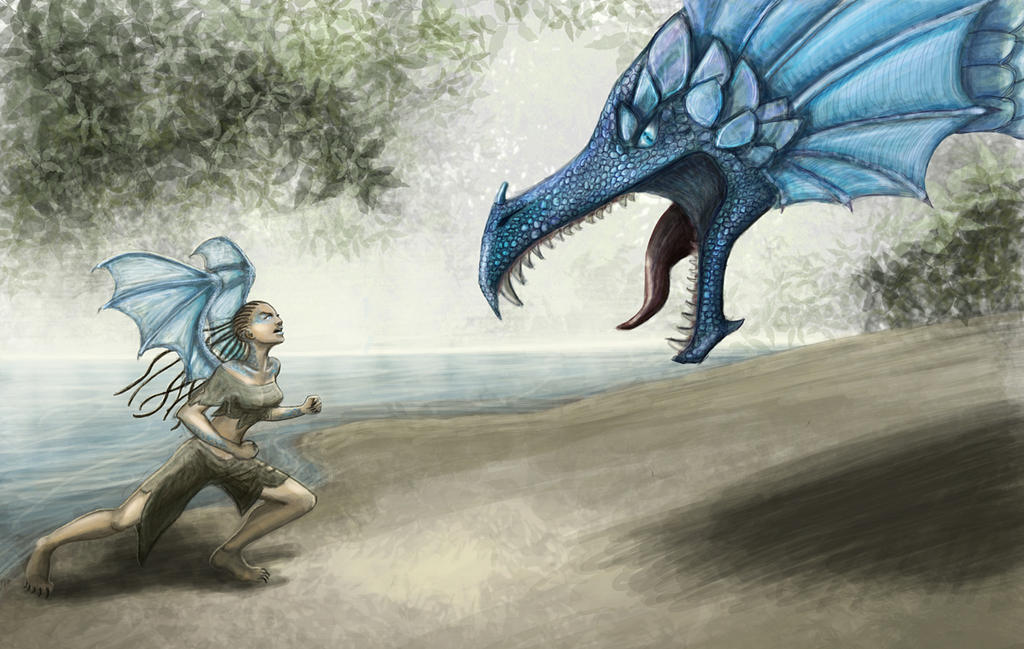
After a sad entry in the ongoing correspondence among bird-keepers, “The Locket” begins with Relpda exulting in having eaten Jess as she returns to the other dragons. She also notes that Sedric has drunk her blood, which occasions upset among the others. Amid the tumult, Sintara questions Relpda about events, and Mercor notes one means through which the dragons formerly created Elderlings. His comments occasion more agitated discussion among the dragons, and Sintara considers the tattered memories she holds, that all of them have. Relpda asserts herself, which comes as some surprise to the other dragons, and Mercor presses Sintara for details that are only begrudgingly given.
Of such sort are more memories than dragons’, stained and tattered and perhaps pretentious Photo by Poppy Thomas Hill on Pexels.com
Sedric, returned to the Tarman, delights in restoring some semblance of civility to himself and his situation, and he reflects on his recent experiences. The distance between him and Alise receives attention, and he notices the locket he had had from Hest as he dresses. Taking it up, he considers his relationship with the man whose image graces the locket, and his thoughts turn warmly toward Carson. Sedric also considers that Leftrin might have been in league with Jess, which gives him some concern.
Alise’s return disturbs Sedric’s reverie, and the two confer together about their respective situations, carefully avoiding some topics but lunging headlong into Hest. She voices her doubts of her husband, and Sedric affirms that Hest does not love her. She is about to press Sedric about Hest further but is distracted by the recognition that he is beginning to take on the features common to the Rain Wilds, which he denies. As Alise presses about the locket, however, he relents and admits his relationship with her husband, expecting scorn and finding only compassion from her. Alise departs, and Sedric ruminates further on what he had with Hest, and the touch of Relpda’s mind on his offers some strange comfort.
Elsewhere, Carson and Leftrin confer closely about events, the former confronting the latter about the notion of harvesting dragon parts. Leftrin admits his involvement and lays out the situation, and Carson accepts Leftrin’s remarks that he is done with such dealings.
The present chapter is surprisingly illuminating about the Elderlings and their origins, as well as about the Others–some fairly deep links back into the Elderlings corpus, such things as I tend to appreciate amid sprawling narratives. (I like things to follow the rules they set out. It’s a preference that gets me into trouble in real life, where exceptions are the norm–and I lie outside it.) I am minded of the adage that “You are what you eat,” and I note that Hobb has long established that so much is true for the dragons–they take on memories from what they consume. It is of some interest that the reverse appears also to be true, that by eating of dragons people take on something of the draconic–and that there is some peril in it for both humans and dragons.
I note, too, that Sedric begins to come out in the present chapter, although only privately and only partially. What queer theory has to say about the narrative, I do not know, not being versed in it as I perhaps ought to be. I do know that the work done on Hobb’s writing in that line has focused not on Sedric, but upon Fitz and the Fool, and I cannot help but wonder at why (except that Fitz has been out in the readers’ world longer and more abundantly). Admittedly, Sedric seems more in line with stereotypes than Fitz and the Fool, which makes for less interesting scholarship–although there may be something to gain from contrasting Hobb’s handling of the characters…
Ah, to have the time to pursue ideas about books again!
Want me to do this kind of work for you? Fill out the form below, and we’ll see what we can do!






 Elliott RWI
