A Robin Hobb Rereading Series: Entry 35: Royal Assassin, Chapter 10

Read the previous entry in the series here.
Read the next entry in the series here.


The chapter that follows, “Fool’s Errand,” opens with a discussion of the state of Skill practice leading up to Verity’s time. It moves to Fitz recounting his Wit experiences with the wolf cub and his waning denial of their growing bond.

Canis lupus occidentalis.jpg
Standing Wolf by Ellie Attebery on Flickr, image used for commentary

Of a morning, Fitz is asked by some of the guards at Buckkeep to put to Verity an idea that they had had to form an independent guard unit for Kettricken. Fitz presses them for a bit before agreeing to carry the idea to the king- and queen-in-waiting. Fitz also rehearses his continued longings for Molly, as well as the state of affairs in Buckkeep following the funeral proceedings. As he makes to attend on Kettricken, he is greeted by the Fool, who poses to him questions about the dearth of Skilled in the Six Duchies. Fitz contemplates the matter, finding difficulty in interpreting the Fool’s words; the Fool presses on, making mockery of Fitz and leaving him much to consider as he reaches Kettricken’s chambers.

When Fitz reaches them, Regal greets and insults him, provoking him to a rage that morphs into impolitic delight at seeing Molly. She excuses herself, and Fitz enters Kettricken’s chambers, finding her centered and more at ease than he has seen her for long. She notes that she has returned to herself, offering philosophical discussion and meditation. Fitz realizes, with some astonishment, that Kettricken is possessed of the Wit, and the wolf cub through him connects to her, exulting in it. Fitz, however, is wary; knowing that his own Wit-work can be detected by others, he realizes that others’ might, as well.

The chapter offers a bit more to support the idea that the Wit, at least in the Farseer novels, is a metaphor for homosexuality. That Kettricken is possessed of it, marking her as even more Other to the mainstream Six Duchies than her ethnic identity already does, poses the same kind of threat that being a closeted member of a minority population in the United States in the mid-1990s did; the revelation, even then and there, could well be fatal, as is noted here, here, and elsewhere. And Fitz already knows he has enemies that would not scruple to use a perceived usurping outsider as an avenue of attack against him.

There is also an interesting bit about meditation in the chapter. The philosophical approach Kettricken voices is somewhat fatalistic, something of a “the world will happen as it happens, despite what you do,” and the machinations of fate do form a major motif in the series, filled as it is with prophecy and the like. But the meditative aspect of Kettricken’s approach to life, juxtaposed with Fitz’s inability to participate in it, seems it could be read as a comment about the accessibility of such practice. Fitz, while not exactly among the lower classes, is not among the elite; he has to work, and abundantly, while Kettricken sees herself as unoccupied in her role as queen-in-waiting. For her to meditate, when Fitz cannot, could be taken as a rebuke of the practice as something set aside from the working world. But that might be going further than can be sustained by the text as a whole; in the Mountain Kindgom, it is asserted, Kettricken would have had and did have much work to do. She is not depicted as having meditated there, though she seems to report it in the present chapter, so…
I shall still thank you for your support.

A Robin Hobb Rereading Series: Entry 34: Royal Assassin, Chapter 9

Read the previous entry in the series here.
Read the next entry in the series here.


The next chapter, “Guards and Bonds,” opens with a brief rumination on the differences between lived experience and careful study. It moves on to track the night after Fitz leaves Molly’s chamber and the following day, when he calls upon Patience once again. He is somewhat surprised to hear her warn him against court intrigues–and moved at her sincerity in doing so, when it is not to her advantage or even, seemingly, in her interest. Fitz is also shown a bit of his folly by Lacey, who pointedly demonstrates that she is not only a lady’s attendant.

image
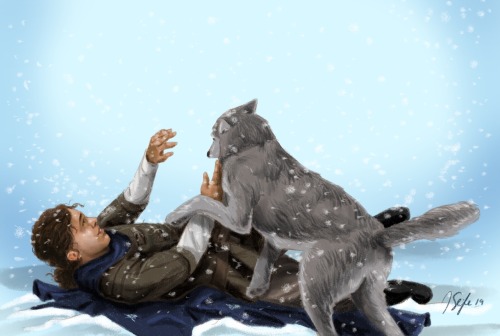
Fitz and Cub (Nighteyes) Playing in the Snow from Royal Assassin, taken from facelessfrey’s Tumblr page, used for commentary

After he leaves Patience, Fitz calls on Kettricken. He finds that she is absent, and he goes in search of her. The search leads him out to the stables, where he is informed that Burrich is at work on a funeral pyre for his old hound, Vixen. He is also informed that Kettricken has left Buckkeep afoot, and Fitz moves to pursue her. When he overtakes her, she expresses a desire to attend on Verity and a dissatisfaction that he seems uninterested in her. She also marks the wolf cub that Fitz has been tending, though she does not connect it to him.

Fitz is able to persuade Kettricken to return to Buckkeep for the time, conversing through the Wit with the wolf cub along the way. Molly marks their return, and Fitz goes off to pay his respects to Vixen before gathering meat and bones to take to the cub. They play together for a time, and Fitz feels himself slipping into their bond. When he breaks the connection, it is only with regret, and he is reluctant as he returns to Buckkeep.

Much of the chapter focuses on depicting women, from Patience’s assertions about the historically strong Farseer queens to Patience and Lacey to Kettricken. To my mind, Hobb makes a point of subverting the kinds of typing that pervades Tolkienian-tradition fantasy literature in the depictions; none of the women seem to adhere to one trope or another, even if Patience lampshades her in-milieu presentation. Rather, they come off as having the kinds of contradictory motivations and behaviors that people, rather than caricatures, do. Patience is flighty, yes, but evidently more capable and aware than she is commonly credited. Lacey seems demure but is clearly a threat. Kettricken is strong and noble in many ways, although she is clearly affected by her interpersonal relationships. Given how many other novels, and more popular, have so much trouble depicting women, it is a pleasure to see one that does not. To see it come from twenty years ago (as of this writing), when so many pieces of contemporary fiction–and all too many people who are all too real–still cannot do better than they do…whether it should be read as praise for Hobb or a lamentation of the state of the world is not yet clear to me.

I shall thank you for your support.

A Robin Hobb Rereading Series: Entry 33: Royal Assassin, Chapter 8

Read the previous entry in the series here.
Read the next entry in the series here.


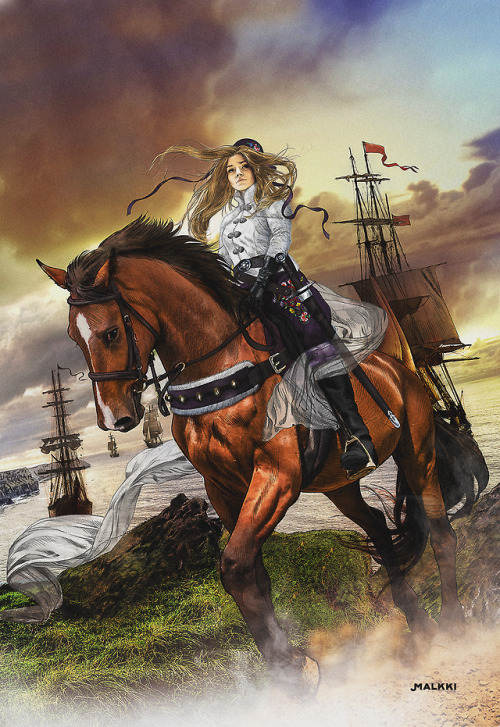
The next chapter, “The Queen Awakens,” opens with two stanzas from the in-milieu “The Vixen Queen’s Hunt” before moving to detail preparations at Buckkeep for a large hunt. Fitz reports to Verity of the events in the keep, and Verity dithers about how he will proceed and his own ineptitude. He does send Fitz to observe in his stead, keeping himself aloof, and Fitz rushes thence, delayed slightly by Regal.

Queen Awakes   “This is not a hunt. Let your hearts be solemn. We do not go to hunt, but to claim our casualties. We go to lay to rest those the Red Ships have stolen from us. Those we put down today are of the Six Duchies - our own”.-Kettricken,...
Queen Awakes by Jemina Malkki on the artist’s Tumblr page,
image used for commentary

Fitz arrives in time to see Kettricken dispel the festive atmosphere that has cropped up, reminding the hunters that they are riding to put their fellow Duchies-folk to rest rather than to garner any acclaim or claim any trophies. The hunters divest themselves of their joyful trappings, and they prepare to depart somberly. Regal is incensed by the whole affair, and Verity, who has descended to take stock of the situation, is strangely emboldened. Fitz moves off to help ensure that matters are made ready for Kettricken’s return.

When she does return, it is at the head of a funeral procession. Fitz assists in preparing the bodies for cremation and identifying the dead–they include one of his childhood friends. A solemn feast follows the funeral proceedings, with Shrewd unexpectedly presiding, and Fitz marks the unity promoted by the event.

Chade also remarks upon it when he summons Fitz to his hidden chambers that night. The old man waxes eloquent upon the unexpected asset Kettricken has become. Fitz is drawn into somewhat dangerous talk by the open mood, and Chade rebukes him for it before announcing that he is to be dispatched on a mission of his own. He does not share the details with Fitz, and Fitz is soon dismissed.

After leaving Chade, Fitz makes his way to Molly’s chambers, opening her door latch ineptly. There is a tense encounter between them, but it ends up with them admitting their love for one another and kissing.

In the chapter, as Verity dithers, Fitz remarks on the unsettling humanity of the man who seems poised to be the next King of the Six Duchies. He had remarked earlier on noticing some of the incapacities Verity displays, notably in his handling of people when he is surprised, and the narrative earlier notes Verity’s confession that he was not raised to rule, but to aid a ruler he trusts. So that much is not new.

What is new, though, is that Fitz seems taken aback by it. Whether the reader is to take this as a sign that Fitz is becoming disillusioned or as a comment against blind trust in a ruler is not clear–and it ultimately matters little, since both readings work. Fitz is growing, and growing stronger, as his interactions with Regal and Chade, in particular, show. Those who rule are themselves but people, subject to the same flaws and failings as any others, and while they may be trusted to a large extent, they will err, and it is likely that others will pay for the mistakes. It is a lesson that seems to need reiteration far more often than offers comfort.

Nothing witty this time, just a request for a bit of funding.

A Robin Hobb Rereading Series: Entry 32: Royal Assassin, Chapter 7

Read the previous entry in the series here.
Read the next entry in the series here.


The following chapter, “Encounters,” opens with a brief rumination of Kettricken’s unusual isolation when she arrived at court in Buckkeep. It moves thence to Fitz confronting his growing and deepening connection to the wolf he had rescued.

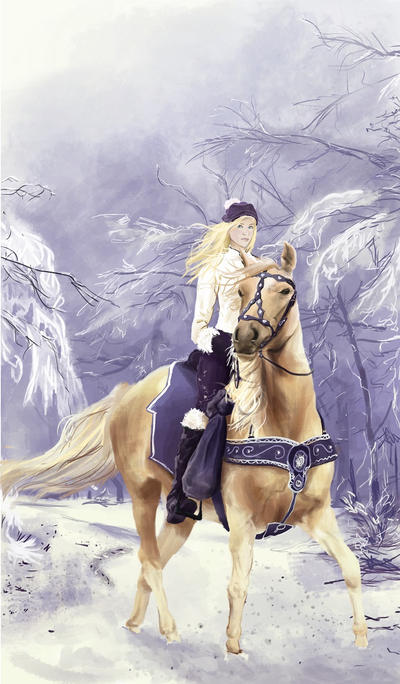
 Fir Snow Winter Evening - Free Stock Photo, Image, Wallpaper
Pretty as it is, this is the kind of thing that can lead to trouble, as Kettricken finds.
Fir Snow Winter Evening from Red Wallpapers, image used for commentary

After, Fitz calls on Patience, having an awkward encounter with Molly along the way. There, he surreptitiously leaves a gift for Molly, and he plies his father’s widow and her maidservant for gossip. The gossip depicts Shrewd as an invalid under the care of Wallace, and Fitz makes to report to his king. When he does, the aforementioned Wallace attempts to interdict him; Fitz finds himself suddenly and unexpectedly supported by the Fool, and the latter manages to provoke an appropriate reaction from Shrewd.

Shrewd takes Fitz’s report, but he repeats himself oddly as he does so, causing Fitz some concern. The Fool confers with him briefly about it, and Fitz goes about his duties in the Keep and outside it during the next few days.

Fitz is about such duties on a later day when he finds Kettricken out riding, beset by Forged Ones. He rushes to her aid, and they manage to fight their way free. In the wake of it, they confer about the situation, and Fitz realizes that it had been contrived by Regal–though there is no way he can prove it to any others.

Then encounter a search party led by Verity not much later, and though the party members are reverent of Kettricken, Verity is not, and openly, publicly rebukes her. He takes her back to Buckkeep, leaving Fitz and the search party to follow–and there is something approaching grumbling from them. There is something similar from Burrich after the horses that had been taken are returned to his stables, though it ranges to include Regal, as well.

That night, Verity summons Fitz to him; Fitz’s talents with the Skill have left Verity with some particularly detailed dreams, to his vexation, Their conversation turns to Kettricken and the situation with the Forged Ones in the area of Buckkeep, and Verity dismisses Fitz back to his own bed.

Verity’s muddling and uncomfortable attitude toward Kettricken noted in the previous chapter carry forward into the present one. Fitz comments upon it, though not openly, and it cannot but be assumed that others in the milieu make similar remarks. Similarly, the issue of unfitness for rule emerges in the present chapter; Shrewd appears to be having mental difficulties, though whether those are inherent to him or a result of the herbs with which Wallace doses him is not clear. Most likely, it is a combination of the two, which has unfortunate implications for the Six Duchies and their stability as matters move forward–and which reaffirms some of the assertions that Hobb’s background and her presumed primary audience’s might well have, that the ruler is much less to be trusted and served than the realm.

I’d still love to say I have your support. Care to send a little help my way?

A Robin Hobb Rereading Series: Entry 31: Royal Assassin, Chapter 6

Read the previous entry in the series here.
Read the next entry in the series here.


The next chapter, “Forged Ones,” opens with a brief rumination on Shrewd’s three sons, the close relationship between Chivalry and Verity, and the special status accorded to Regal. It pivots to Fitz’s return to Buckkeep and his shock at seeing Regal riding with Kettricken. He has opportunity to ask Burrich about it briefly before answering a Skill-summons from Verity.

Kettricken by Ptolemie
Kettricken by Ptolemie on DeviantArt,
image used for commentary

When Fitz attends upon Verity, he is bidden eat while he is informed of the presence of Forged Ones in the area of Buckkeep. The two confer about the problem, and Fitz realizes that the Forged Ones appear to be converging on Buckkeep. Verity tasks Fitz with learning more about the converging Forged Ones and to put down those he can eliminate quietly. And Fitz broaches the issue of Regal’s attentions toward Kettricken with Verity, which Verity acknowledges but sets aside in favor of his own concerns before Fitz offers him a strange sort of comfort.

The chapter is brief, fewer than ten pages in the edition of the book I’ve long used for pleasure reading and for scholarly work. (I look forward to the illustrated anniversary editions of the Farseer books that appear to be forthcoming and have pre-ordered a copy of the first one.) That does not mean there is not material upon which to comment, however; it might be noted that Verity, for all the virtues he has as a character in the series, comes across as something of an ass in his attitude toward Kettricken, for example. While it may not be the case that an arranged marriage would be expected to be a happy one, and while a ruler-to-be could reasonably expect subjects to be of service to them, Verity does appear to view Kettricken as supposed to be what Fitz calls in his own father’s marriage to Patience “an escape,” rather than as a person in her own right who views herself as in service to the nation rather than to its leader.

It is something of a tension in the series as a whole, though, between service to the realm and service to its ruler. Some traditional theories of kingship, particularly medieval models that the Farseer novels might be thought to use because of their seeming medievalism (though, as I’ve asserted, it’s not the best reading), hold that the two, ruler and realm, are as one. Service to one is therefore service to the other. At the same time, it is also clear that at least one of the potential rulers of the Six Duchies is not suited to rule; Verity seems to muddle about, though with the thought of preserving the nation foremost in his mind, while Regal seems focused on himself. The theory clearly does not hold when it is clear that the ruler might well be bad for the realm–but that shows as much its writer’s background and presumed primary audience as much as anything else.

Support for the Series, please?

A Robin Hobb Rereading Series: Entry 30: Royal Assassin, Chapter 5

Read the previous entry in the series here.
Read the next entry in the series here.


The following chapter, “Gambit,” opens with a brief rumination of older-in-milieu codes of conduct. It pivots into a gloss of some time, during which Buckkeep slides into winter and Fitz attends to his then-few assigned duties. He also moons after Molly, for which Burrich gently chides him. The older man offers what seems some useful advice, but he is stricken when Fitz relates the way in which Patience cautioned him against pursuing Molly.

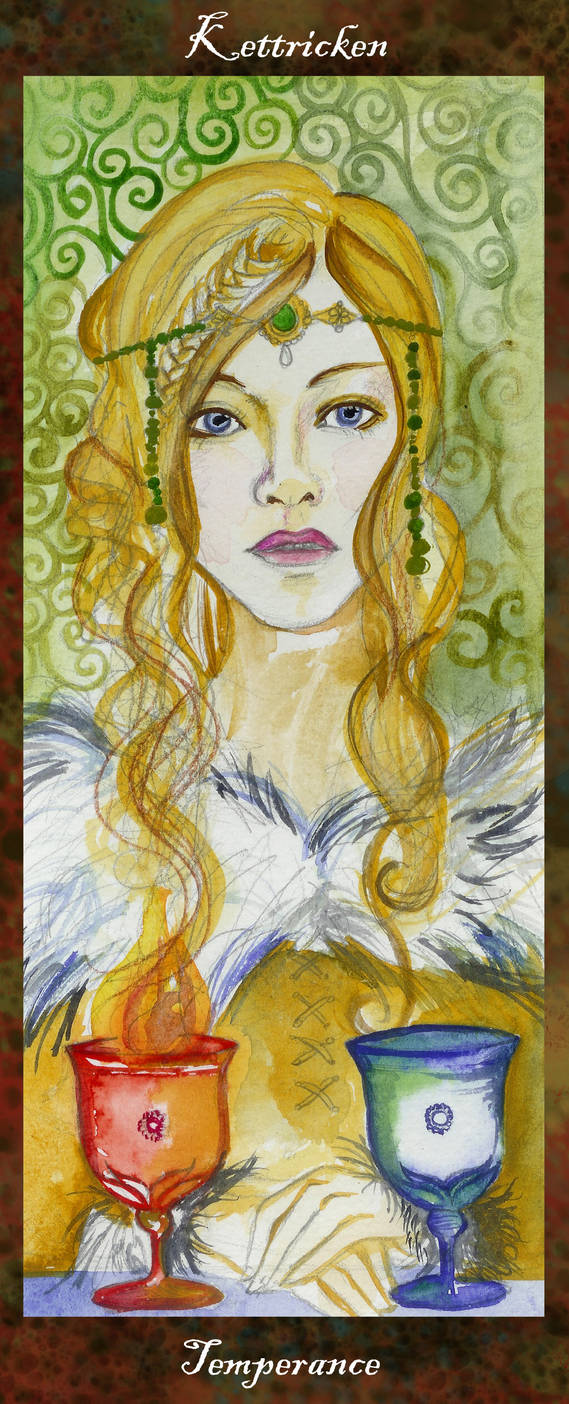
Elderlings Tarot - Temperance by cottontofu
Elderlings Tarot – Temperance, by cottontofu on DeviantArt
Image used for commentary.

Fitz takes Burrich’s advice and amends his behavior. He also finds himself being drawn more and more closely to the wolf cub he had rescued as he works to rehabilitate him. And he finds himself growing closer to Kettricken, who is effectively alone at what remains, for her, a foreign court whose customs are opaque to her. As he converses with her, overly boldly, Fitz realizes that he has been manipulated by Chade into becoming her de facto adviser, a role he continues to ply among also calling on Patience daily.

Fitz also finds himself summoned to Shrewd, and he encounters Regal as he answers the summons. After a tense exchange, Regal moves on, and Fitz attends on his king. He finds the King’s chambers strangely secluded and Shrewd himself somewhat addled–until the new chamber servant, Wallace, leaves. After he does, Shrewd tasks Fitz with a mission to a northern Duchy, Bearns, where there are rumors of budding unrest and rebellion surrounding a self-styled Virago.

As he departs from his king, Fitz encounters Serene, alongside whom he had studied the Skill. She had succeeded Galen, and she had taken on his hatred of Fitz. The encounter worries him as he prepares for and heads off to his errand.

In the end, the errand runs smoothly. Fitz provokes a challenge from Virago he needs not fight; his more clandestine training ensures that she presents the symptoms associated with oathbreaking, and she flees. The Duke and his daughter offer strange familiarity that leaves Fitz entirely uneasy.

Early in the chapter, Burrich makes a comment, with “bitterness in his voice,” regarding being unwed and, to his knowledge, childless. The comment and its delivery suggest that the homoerotic overtones between him and Chivalry (previously noted here, here, and here) may not sound as clearly as the earlier novel had implied–which would reflect continued conceptual development as Hobb continued work on the series. Or it could imply that the relationship, being one along uneven power dynamics, was more coercive than the earlier novel implied, which has an entirely different set of resonances.

The gloss on the events of Fitz’s mission to Bearns is perhaps more telling. His target’s name is telling; the Six Duchies tend towards emblematic names, and “Virago” fits in the archaic sense of “woman who does manly, heroic deeds” and the more common current sense of “unpleasant and ill-tempered woman.” (And it might be argued that many traditionally masculinized virtues are unpleasant and of ill temper, as well.) She evidently thinks herself more the former and shows herself more the latter. Fitz’s handling of the situation is remarkably good; he not only eliminates Virago, but he does so in a way that leaves her unable to be a rallying point for further action, shaming her without lifting his blade. He is, ultimately, good at his job, and if he were to confine himself to doing that job, things might be otherwise than they turn out. But that’s material for later parts of the write-up.

More help is always welcome–and appreciated!

A Robin Hobb Rereading Series: Entry 29: Royal Assassin, Chapter 4

Read the previous entry in the series here.
Read the next entry in the series here.


A chapter titled “Dilemmas” follows and opens with a brief rumination on the Wit and the Skill before portraying Fitz waking alone in his room and staggering off to make ablutions. He returns to bed and to a fitful sleep.

Fitz and Nighteyes by Manweri
Michelle Tolo / Manweri’s Fitz and Nighteyes on DeviantArt: image used for commentary

When he wakes again, he finds his chamber has been tended to. As he avails himself of it, the Fool enters and checks on him, bantering with him acerbically before leaving just ahead of Patience and Lacey bustling in to check on Fitz. They fuss over him, and Patience presses upon him the folly of his putative attempts to woo Molly, citing the entanglements of his royal–if bastard–blood and Molly’s own potential prospects. Fitz protests to no avail, and Patience and Lacey leave him to rest.

After contemplating the decor in his chamber again, Fitz dozes off to be wakened by a summons from Chade. Answering it, he finds the old man considering a scroll. He is also clearly considering political implications, as he walks Fitz through a general idea of a way people might seek to exploit him. They exchange news, with Chade offering detailed information on the problems Verity and Kettricken face. Chade also offers some rebuke to Fitz for his conduct with Molly, echoing Patience’s warnings about the political ramifications. He offers some commentary about his relationship with Chivalry and Verity before returning to the topic of Fitz and Molly, urging him to heed Patience’s advice in the matter He also reiterates his warnings to Fitz for his own safety.

After their meeting, Fitz makes his way into Buckkeep Town, walking idly and taking in the gossip the place offers. Along his route, he encounters a vendor selling animals to be used for sport–including a young wolf. Fitz haggles for the wolf, purchasing him and taking him outside of the town, purposing to get him strong enough to fend for himself.

The wolf is of paramount importance in the series, and the level of engagement between Fitz and the wolf cub in the chapter makes that importance clear. Earlier events–the episodes with Nosy and Smithy in Assassin’s Apprentice–make clear that Fitz bonds to animals swiftly and deeply, and he already seems to share a particular affinity for the wolf he has found in a cage in Buckkeep Town. There will be more to come for the two of them, as is clear even without knowing from prior readings what will happen in the novel.

Less significant to the overall narrative, perhaps, is something that I noticed as I read the chapter this time and that I do not recall having noted before. Fitz wants to disregard Patience’s advice (and the emblematic name makes a bit of a joke) regarding Molly, and, having been an adolescent boy in the throes of lust that might have had something of love in it, I can well understand that desire and the recklessness that informs it. That is not what I note, though; what I note in this reading is that Chade’s reaffirmation of Patience’s advice seems, if not to persuade Fitz, at least to mollify him. Admittedly, Chade has a particular authority over Fitz, but there is still something of the “guys will only listen to ideas when other guys say them” about the matter. How to read it–a reflection of the prevailing standards surrounding the composition, a yoking of such behavior to immaturity, or something else–is not necessarily clear to me as I write this, but it is something that might stand some investigation moving forward.

It’s one of the things that I have loved about Hobb’s works. There’s a lot to unpack in them.

Any chance you could send some help my way?

A Robin Hobb Rereading Series: Entry 28: Royal Assassin, Chapter 3

Read the previous entry in the series here.
Read the next entry in the series here.


The third chapter in the novel, “Renewing Ties,” opens with a description of an old scroll detailing the encounter of the early Six Duchies ruler, King Wisdom, and the Elderlings after which the overall series takes its name. It moves to Fitz going back out into Buckkeep Castle before he finds himself drawn to a tower room to which Verity has summoned him via the Skill. The two of them confer frankly and surprisingly openly, and Verity seems to have great affection for his bastard nephew.

Image result for verity farseer
An image described as of Verity, used for commentary.
Source unknown to me; information will be welcome.

When Fitz leaves Verity, Lacey, Patience’s maid, finds him and bustles him to her lady. Patience quizzes Fitz randomly, and he begins to suffer again from the lingering effects of the poison that had been used upon him. Patience recognizes his infirmity and sends him off to rest–and he encounters Molly along the way. He is initially buoyed by the encounter, but as he elicits information from her, he finds himself rebuked for his seeming drunkenness and for the many lies he had told and allowed, and he learns that matters have been poor for her family. She leaves him despairing of his infatuation with her, and he staggers back to his room to sleep.

Again, I find myself reading affectively, sympathizing with the folly of an adolescent boy trying to make sense of lust and love at once, and I have to think that that correspondence informed my early regard for the novels; when I first read the Farseer books, I did so much closer to my own adolescence than I am now (though some might say I still need to grow up), and I was not much more adept than Fitz in such matters, if I was at all. It is as good a reason as any to start to make a fuller study of something, and better than most.

There are parts of me, even now that I am largely out of academe–I’ve given up the search for an academic job, and I’m not teaching in the current session at the one school where I do still get to stand in front of a classroom–that clamor for me to make some kind of insightful, scholarly comment about the chapter. And I could tease out something about, perhaps, a suggestion of something between Charim and Verity like that I have suggested lay between Burrich and Chivalry in the imagined past of the novel, or I could point out that Hobb subtly signals the ultimately untenable nature of chivalry through reflecting on Chivalry when Fitz’s eyes meet Patience’s and “She nodded slowly, accepting the lie [Fitz had told] as necessary, and looked aside. [Fitz] wondered how many times [his] father had told her similar lies. What did it cost her to nod?” Neither would be wrong, exactly, and either might be fodder for a short piece of commentary that might well be worth doing. So might a bit linking what happens in the chapter to more of the foreshadowing that is itself a common theme in the series of novels; looking ahead only to find later that such peerings were correct is something of a motif in the main Elderlings novels, perhaps the dominant one. (I’d have to do more work on that, though.)

At another time, I will have such things to write. I hope you will continue to read them.

I’d love to have your support.

A Robin Hobb Rereading Series: Entry 27: Royal Assassin, Chapter 2

Read the previous entry in the series here.
Read the next entry in the series here.


The next chapter, “The Homecoming,” reflects briefly on the founding of Buckkeep before moving to gloss the progress made by Fitz, Burrich, and the stableboy Hands from the Mountain Kingdom back to Buckkeep. It is a wintry journey and slower than might be hoped, the more so because Fitz’s condition impedes their travel. Too, when they lay over in an inland town, Burrich and Hands hear much of the disgruntlement about the continuing threat of the Raiders and the appreciation the people seem to have for Regal; Burrich takes the opportunity to caution Fitz that his uncle still hates him and will have him killed if he can.

Buckkeep at night by Winterkeep
Buckkeep at Night, by Winterkeep on DeviantArt.com, used for commentary

At length, Fitz and his party return to Buckkeep, where they are challenged by the gate guard. After a bit of banter, they are recognized and admitted, and Burrich has to caution Fitz again about returning to his subordinate place as a bastard princeling in a place where people care about such things. Fitz accedes to the wisdom, if with difficulty, as well as to the wisdom of allowing others to do for him what his condition prevents him from doing well. And after, when Fitz makes to report to King Shrewd and King-in-Waiting Verity, he is turned away by both and muses on the changes that have occurred while he was away and with the arrival of others before him.

The device of using rumors heard in passing through a town to gloss over events is a good one; exposition is often a difficult thing to do well, though it is also necessary, so any adept handling of it is good to see. But it is not as good as the depiction of the strange tensions of adolescence that Hobb depicts in Fitz; I am not so old that I do not recall the awkwardness of my own teenage years, though they were far less eventful for me than Fitz’s are for him, and I find myself reading affectively again as I sympathize utterly with a young man who, having had a taste of being something more, chafes at being returned to older, more constraining patterns. And I sympathize, too, with the desire to be open with someone, only to have that openness set aside–gently, perhaps, as Burrich does with Fitz, but still put aside. I have a person with whom I can be so open now, and I revel in it, but I recall not being able to do so. Again, though, it’s an affective reading, and something I ought to know better than to do.

Except that the idea that any would “know better” than to allow themselves to be moved by a character in a story is a strange one. To do the work of literary study, it is necessary to be able to remove reader from text to some degree, just as a physician must be able to look at the flesh of a patient as a thing apart from a person to some degree. Yet the physician who does not engage the patient’s humanity is decried, and rightly; no scholar, no practitioner, does well to separate the humane wholly. Acknowledging it is needed, yes, but ignoring it is certainly not.

Support the labor of doing this on this Labor Day.

A Robin Hobb Rereading Series: Entry 26: Royal Assassin, Chapter 1

Read the previous entry in the series here.
Read the next entry in the series here.


The first chapter, “Siltbay,” opens with an in-milieu reflection on the position of King/Queen-in-Waiting, which serves the Six Duchies much as the role of Prince of Wales serves the UK or Dauphin served the French monarchy; attention is paid to the holders of the title under Shrewd. It moves into a Skill-vision, with Fitz occupying Shrewd and learning both of the attack on the place in the chapter’s title and what it truly feels like to be an old man. He observes as Shrewd reasserts himself and issues orders to send aid to Siltbay; when the old man turns his attention to Fitz in his mind, their connection is broken, and Fitz makes to return to Buckkeep.

The Fool and King Shrewd by Crooty
Crooty’s The Fool and King Shrewd on DeviantArt, used for commentary

There is a bit of annoyance in the chapter–not because of what it shows, because the descriptions are well written and finely balanced, and they offer a useful musing on the status of the conflict in which the Six Duchies finds itself. No, the annoyance comes at the whiplash attitude in it. At the end of the prologue, Fitz had been ready to retire from the world; what is, in effect, a nightmare, if one “real” in showing what “is” in the milieu, turns Fitz around. It reads as hurried, somehow, something of a deus ex machina, and if there is antecedent for such in the tradition from which Hobb borrows for the novels as a whole (about which there is some discussion here), that does not mean it is the most desirable thing to see in the present text.

A sense of being rushed is something I have noted in others of Hobb’s works (this and this offer some short discussions thereof; there are others). I think it attracts my attention because I like Hobb’s writing as much as I do (and it should be clear I do; I spent the time doing a master’s thesis on her work, as well as presenting any number of papers on her writing and buying copies as circumstances have permitted across decades–and such projects as the present one). I want it to be without flaw, and so when I see something that I have to regard as being less than it could be, I cannot help but mark it. But that failing is mine, not that of the author whose work I have spent most time reading and writing about. (I think; I’ve not logged hours, but I’ve certainly written on Hobb more than I have Asimov or Tolkien, who are the two most likely competitors.)

A failing that will not be mine will be an end to the rereading before I have finished it. As I’ve noted, the reading I’m doing now is slower than I’m accustomed to doing, but that it is slower does not mean I am going to be giving up on it.

It’d still be nice to have you chip in to help support this.