Read the previous entry in the series here. Read the next entry in the series here.
The next chapter, “Loyalties,” opens with Kennit reviewing a letter from Sincure Faldin and musing on its contents–among others a description of the investigation by the Paragon‘s crew. The news of the Paragon rocks him, and he contemplates killing and replacing his entire crew, as well as fleeing the Pirate Isles entirely. But his attention returns to those gathered around him: Sorcor, Etta, Wintrow, and Jola, the last of whom is currently the first mate on the Vivacia. Kennit muses on his successful piracy, aided by the serpents that come at his ship’s call, per agreement. As the news received from Faldin is discussed, Wintrow makes note of one of the names mentioned in it: Brashen Trell. Kennit marks the shift in attitude from Wintrow and from the ship as Wintrow discusses his aunt, whose presence on the Paragon and in Divvytown is also marked. Ominous words are exchanged afterward.
Not as far off as might be thought… Image from Giphy.com, used for commentary.
Aboard the Chalcedean ship, Malta continues to suffer the Satrap and the crew. She muses on her situation–it is not a good one–and upon the status of her family. She also absently picks at a scar on her forehead, finding its texture rough and its extent greater than she had anticipated. As she considers matters further, Malta begins to more coldly assess her circumstances and the ways in which she can achieve and retain agency, and she begins to proceed along those lines, making for the ship’s captain. When she finally confronts him, she seems to make some progress at improving her situation and the Satrap’s, though the latter is hardly conscious of it until water for bathing and clean clothes are brought to their cabin.
In the evening, Wintrow and Kennit confer with Bolt. The ship is acerbic at the prompt to consider Althea, but agrees, along with Kennit, not to harm Althea. Wintrow pleads for more but is rebuffed and sent off to Etta. After, Kennit’s wizardwood charm speaks up openly, and it and the ship press the pirate savagely about the Paragon and his experiences with that ship.
A couple of things come to mind as I reread the chapter. One is that the focus on Kennit’s internal state seems set to breed sympathy for the man in the reader, even as it presents thoughts of wholesale slaughter. Perhaps “understanding” would be a better term, though; I do not think that such attitudes are regarded as favorable, but I do think that Kennit expands upon some ideas that are present in Regal Farseer. I acknowledge the difficulty and presumption in conducting psychoanalytical readings of characters in works of (fantasy) fiction, but I do think there’s a useful reading in there–and one that explains but does not excuse the character’s behaviors and attitudes.
Another is that Malta’s shift in attitude and behavior aboard the Chalcedean ship seems ripe for reading as a reflection of various reclamation ideas, a deployment of repressive patriarchal gender roles in an attempt to secure her own advancement. A comparison to Serilla’s machinations, both during her travel from Jamaillia with the Satrap and in Bingtown afterwards, seems ripe for making, as well, although I note again that I do not have the theoretical or critical background to do a good job of analyzing and interpreting it to any substantial degree. Still, I cannot help but see the parallels in play, and I find myself wondering how often I am confronted in such ways, with people adopting what they believe are my expectations in an attempt to get from me what they want. I know there are ways in which I serve to deny or restrict the agency of others in unacceptable ways (there are limits to be enforced in some situations, though, and not always those voluntarily accepted; I would be a poor father not to work to keep my seven-year-old daughter safe, after all, and doing so does sometimes mean I have to disallow her from things), and I am sure that those over whom I have power do things to get around those denials and restrictions, even if I am not always aware that I am imposing them. But that is a facet of privilege, and there is much comment to be made about how relative privilege is addressed in the Elderlings corpus as a whole…
The text below was presented at the Tales after Tolkien Society‘s sponsored session–Deadscapes: Wastelands, Necropoli, and Other Tolkien-Inspired Places of Death, Decay, and Corruption–at the online 2021 International Congress on Medieval Studies; some emendations to suit the medium are made without further comment. Embedded images were not presented, but are included to aid discussion.
Robin Hobb1 is a pseudonym of Washington-state-based author Meghan Lindholm; under the pseudonym, she has written multiple works, far exceeding the output of certain fantasy authors who are her contemporaries, including the sixteen novels (along with assorted novellas and short stories) set in the Six Duchies, Bingtown, Jamaillia, and lands accessible from them–the Realm of the Elderlings corpus. Nine of those novels–the Farseer, Tawny Man, and Fitz and the Fool trilogies–center on the character of FitzChivalry Farseer, the bastard son of the heir apparent to the Six Duchies, trained as an assassin and wielding two powerful magics. The remaining seven–the Liveship Traders trilogy and the Rain Wilds Chronicles tetralogy–focus on Bingtown and the nearby Rain Wilds; characters move among the series, and the events in one series influence our outright give rise to those in subsequent series, although each can stand as an independent reading. Throughout them, Hobb nuances the tropes and patterns common in the literary traditions of which she partakes; while her work is clearly in the Tolkienian tradition,2 including those antecedents of it identified by Anderson,3 it features substantially a number of elements not frequently seen within that tradition,4 and she tends to move away from the commonplaces while remaining grounded enough in them to draw readers along. Her tendency towards nuance extends to sites of memory, not so much in denying proper honors to the dead, but in playing with the very idea of death; her specific motion away from tropes about memorials offers a further suggestion of the limits of such literary traditions as the Tolkienian and possibly points to ways they can be reclaimed and reimagined to good effect.
The Typical Sites of Memory: The Stone Quarry, the Dragon Garden, and Kelsingra
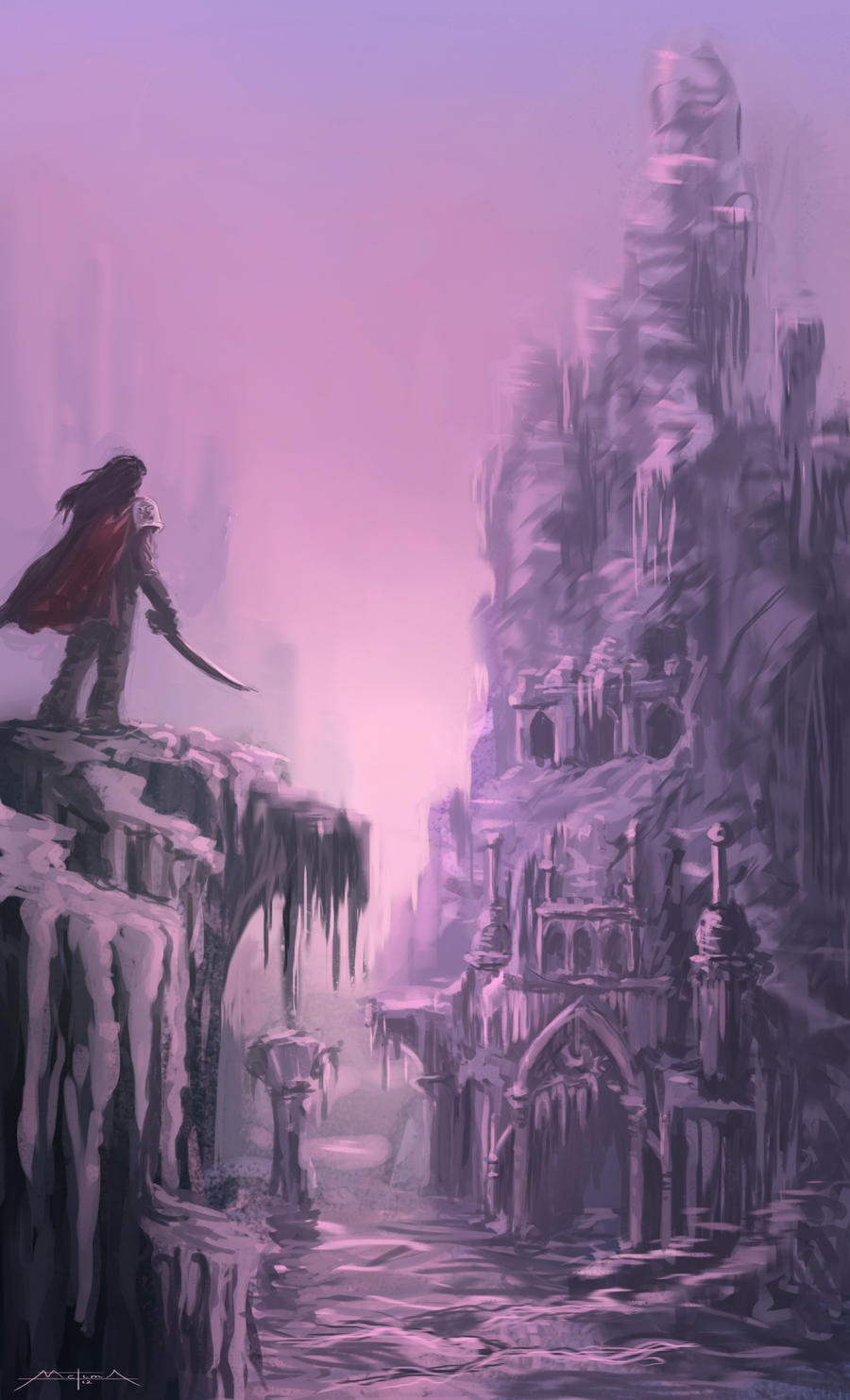
The sites of memory in the Elderlings novels that most closely correspond with the literary traditions in which Hobb operates appear initially in the third Elderlings novel, Assassin’s Quest, as a ruined city, a quarry of magic-imbued black stone and an overgrown collection of carved and colored statues of dragons and similar creatures, ranging to a winged boar and an antlered, man-faced chimera.5 The collection is even commented upon as possibly being a graveyard; “Perhaps there are tombs beneath these creatures. Perhaps this is some strange heraldry, marking the burial places for different families,” the narrator remarks.6 Called to mind are such sites as the Arthurian Avalon and the Tolkienian Rath Dínen, with the latter’s “pale domes and empty halls and images of men long dead” and separate houses for the corpses of separate families.7 Called to mind, too, are the mausoleums and cemeteries of the readers’ world that often show in darkened stone markings indicating who is interred that would not be decipherable to those not trained in reading those markings, as well as the cenotaphs that mark the fallen who could not be recovered.
There’s a reason I used this image before. It’s Frozen History by MeetV on DeviantArt, here, used for commentary.
Both the garden and the quarry are associated in the novel with a series of roads made from the black stone of the quarry and a city largely built of the same substance: Kelsingra. That city is itself a silent memorial of a bygone civilization, empty of life but filled with memories of it that intrude into the consciousnesses of those who enter it and have the Skill to perceive them. When FitzChivalry first encounters Kelsingra, he finds it empty, perceiving no signs of life around him;8 as he searches it, he finds that “Whole domes of roofs had fallen in…outer walls had fallen away entirely, exposing the inner chambers and filling the street below with rubble” and sees, among others, “the tatters of ancient hangings, a collapsed wooden bench.”9 When another character later comes there, she finds it similarly devoid of the population it once had and cast into ruin by some long-ago cataclysm, claimed by no others, not even the creeping of vegetation and animal life that would normally swallow ruins in time.10 At the same time, the stones of Kelsingra–and of the dragon-garden–store and re-present memories to those with access to the appropriate magics; again, the stone dragons can be reawakened with the proper offerings, and even the dead city “replays” its memories for FitzChivalry as he stalks through it, immersing him in images of the daily lives of inhabitants.11 Clearly, then, the city is a testament to the departed, serving as a necropolis and, more literally than many others, as a locus of recollection.
As with much else that Hobb writes, however, she nuances her major sites of memory away from her prominent literary antecedents–given the context of the genre, particularly Tolkien, with whose work Hobb is avowedly more than familiar.12 The statues in the stone garden, all of which initially appear as sleeping creatures,13 are not grave-markers; they appear asleep because they are asleep, constructions imbued with the personalities and essences of the magic-users who carved them14 and able to be reawakened and summoned to aid with the correct combination of offerings.15 Again, the Arthurian comes to mind–the “once and future king” idea emerges prominently with a former ruler of the Six Duchies being among those carved figures.16 So does the Tolkienian, as the Dead at Erech are similarly brought forward,17 although there is a marked difference between the two, a nuancing away from Tolkien’s prevailing ideas. For while both the Dead of Erech and the stone-garden dragons are summoned by extra-natural means to help repel largely naval invading forces from the key nations,18 the Dead are addressing their earlier failures,19 while the stone-garden dragons are acting as the result of their successes.20 Indeed, the carvings are in most cases a reward for those who complete them,21 a fulfillment rather than a punishment.
Too, the fates of those sites differ. In traditional Arthuriana, Avalon remains “another place,”22 generally outside access despite protestations of its “real” location. In Tolkien, Rath Dínen is not much mentioned after the death of Denethor and the rescue of Faramir; it remains in place to receive Aragorn, but its tale does not extend past that.23 Kelsingra, and presumably the quarry and garden with which they are linked, end up subject to looting24–not only by FitzChivalry as he tries to survive pursuit and serve the king who has called him to his nation’s aid,25 but also by avaricious merchants.26 Although the looting does not, ultimately, occur in force,27 the fact that the potential for it is recognized and acted upon at all is a marked deviation from the idealization of Tolkien and of much other fantasy literature in the Tolkienian tradition. Attention to such concerns–the all-too-human factors of avarice and pettiness–is a hallmark of Hobb’s writing; that they manifest with regards to the deadscapes Hobb presents points towards a reimagining of the tropes with which Tolkien and those following him work, bringing fantasy literature more in line with the observable world of the reader and helping it to speak towards more attainable hopes for the readers’ world.
The Strange Sites of Memory: The Liveships
In the Realm of the Elderlings, Hobb also presents an uncommon–and unexpected–class of sites of memory: the liveships. As the name suggests, the liveships are living vessels, constructed from a substance called wizardwood and quickening to thinking, feeling life after taking in the spirits of three people of the same family–a life that depends for its stability and security upon the continued presence of a member of that family upon the ship’s decks.28 Peculiar to the Bingtown Traders, they are faster, better ships, more resistant to storm and wave, immune or nearly so to the barnacles and rot that plague other wooden vessels, and they alone can navigate the caustic waters of the Rain Wild River, from which flow the treasures that ensure Bingtown’s economic existence. As such, they are highly prized–such that a multi-generational loan, secured by potential marriages, to purchase one is not at all uncommon29–and, in some ways, are regarded as both enduring members of their owning families and the defining emblems of those same families.
Even so, the liveships are openly acknowledged to be memorials to the dead; not only do the lives in their names come from the deaths of their family members, as attested, but they take on the memories and knowledge of those family members.30 And, because they remain in service across generations, they function as repositories of their families’ histories long after their quickening; for example, one of the first such ships, the Tarman, remains in service despite having been built before the magical properties of wizardwood were known,31 and the ship remains in conference with its family even so. To ship on them, then, is to sail among the dead and alongside the dead, and while there are other stories of such things–the Flying Dutchman is only the most prominent example–they are not as common as other encounters with the departed, not as common as sites of memory and tombs visited happily or reverently, and it is certain that the liveships are valued and appreciated by the Bingtowners.32
But.
The unusualness of the floating memorials that the liveships are is not confined to the fact of their magic or their water-borne work. There are many magical memorials in fantasy fiction, after all, and Tolkien writes of the ability of water itself to recall earlier events.33 No, the chief motion away from the Tolkienian tradition that Hobb makes with the liveships is one that points back to earlier beliefs about magic as being unnatural and despicable. There is motion towards the idea early in the Liveship Traders novels, when a character who had been in training as a priest evidences concern about and suspicion of his own family’s liveship,34 although his suspicions fall far short of the reality that emerges throughout the series. For the wizardwood of which the liveships are built, and of which other items of extranatural power are made, is not wood at all, but the cocoon-material of dragons–and not all of the dragons whose cocoons were harvested were dead before their cocoons were opened and cut apart.35
More, as is made clear through the series, the dead dragons remain in the wizardwood no less than the spirits of those who die upon the ships’ decks–aware of what happens “above” them in the consciousnesses of the liveships that form from the quickening even as they are imprisoned in forms imposed upon them.36 Indeed, so powerful do the echoes of the dragons remain in the wizardwood that combining the cocoons of multiple dragons leads to the untenable instability of a ship built from such a combination.37 Marlowe’s Mephastophilis comes to mind,38 and surely being left in a state of undeath, aware but unable to interact in any meaningful way, is an ongoing hell not often seen employed and exploited by the “heroic” characters in Tolkienian-tradition fantasy fiction. Even when, as happens at least once, the underlying dragon-persona can emerge to the “front” of the liveship, its existence remains a partial and circumscribed one, far different from the free-ranging (and, indeed, imperious) life a dragon would otherwise have in the Elderlings corpus.39
The liveships, then, in addition to being sites of memory are sites of torment, legacies of oppression and exploitation that are not the less heinous because so many who perpetrate it are (kept) ignorant of the import of their deeds. Nor is it made less heinous by the individual resolutions to which the liveships come, integrating the “levels” of their personalities–dragon, human, and created liveship–into cohesive wholes; they emerge from trauma, yes, and continue to take in the lives of those who sail upon them, but they continue, too, to carry the memories of what has been done to them. And while works in the Tolkienian tradition do make much of redemption, of persevering through suffering and past it, they do not as often reckon with what befalls those who do so suffer when those who made them to suffer yet remain in the world alongside them. Yet that is what those among Hobb’s readers who have suffered must do, and in looking at that ongoing life, after the “happily ever after,” as in other things, Hobb usefully moves beyond the confines of mainstream fantasy literature.
Coda
Again, Hobb writes within the Tolkienian tradition, borrowing from medieval and medievalist antecedents as well as other influences and working to nuance and adapt the prevailing tropes of that literary tradition. In her alterations to common depictions of wastelands and deadscapes, of sites of memory, as in her shadings and nuances of other tropes,40 Hobb provides a more authentic, accessible, verisimilitudinous fantasy literature than do many of her contemporaries and predecessors, which allows the quiet messages that emerge from her work to lodge more deeply and powerfully with readers. Those messages, speaking among others to the problems of colonialist agendas, to concerns of gender identity and equality, to political and interpersonal theories, to self-determination, and to increasing inclusivity, are well worth hearing; anything that makes them come across more easily and to more people is to be prized, therefore, and the more so in that it repudiates the ongoing misuse of the observed medieval and of medievalist fantasies by execrable groups with opprobrious ideologies that deserve all opposition.
Notes
I note that I write this while living on land once inhabited by the Lipan, Gaigwu, and Nʉmʉnʉʉ peoples and from which they have been in large part displaced by colonialist misdeeds–from which too many continue to suffer and against which much more needs to be done. The acknowledgement does not suffice, but to fail to do even so much is not acceptable.
The related city of Frengong, lying under the city of Trehaug, is looted almost entirely; it is the source of the wizardwood of which the Bingtown liveships are made, as well as many other treasures taken from the remains of the dead. There is something of a colonialist theme at play in the Elderlings novels; explicating it lies outside the scope of this paper.
Hobb, Assassin’s Quest, 525-26.
Robin Hobb, City of Dragons (New York: HarperCollins, 2012), 125-29, etc.
Robin Hobb, Blood of Dragons (New York: HarperCollins, 2013), 409-15.
Robin Hobb, Ship of Magic (New York: Bantam, 1999), 47-49.
Ibid, 47, 337, 625-26, 714.
Ibid., 160.
Robin Hobb, Dragon Keeper (New York: HarperCollins, 2010), 20.
The example of the Paragon in the Liveship Traders novels is a notable exception, of course–but it is remarked upon by many of the characters in those novels as being an exception, and despite the problems attendant upon the ship, many characters see value therein.
J.R.R. Tolkien, The Silmarillion (New York: Ballantine, 1982), 8.
Hobb, Ship of Magic, 152, etc.
Robin Hobb, Mad Ship (New York: Bantam, 2000), 43-47, etc.
Read the previous entry in the series here. Read the next entry in the series here.
The following chapter, “Bingtown Negotiations,” starts with Ronica looking over the remains of the old Traders’ Concourse as the people of Bingtown gather together. She notes, too, that the people assembled are strangely equal, affected alike by war and grief. Notably, Serilla, Caern, Kelter, and members of the Traders’ Council are in attendance, as are representatives of the Tattooed, the Khupruses, Mingsley, and Selden; the last claims to be present to intercede between Bingtown and Tintaglia, and he reports on her current status. Keffria regards her son strangely, taken aback by the changes to him.
The assembly begins to confer, fractiously at first, spurred by Caern. Serilla unceremoniously rejects him and attempts to assert authority; the rejection is upheld but the authority rejected, in part by the Tattooed. Jani speaks in favor of the position outlined by the Tattooed, as well. And Tintaglia arrives, announcing her presence decisively and berating the people gathered together. Selden again intercedes, diverting what seems promised retribution, and Ronica senses the political realignments at work. Tintaglia again reiterates her command that the folk of Bingtown help her save dragonkind, noting the means to do so; negotiations regarding how best to do the work required ensue, and a tentative accord is in place when Keffria interjects regarding Malta. Reyn rushes to her aid, and Tintaglia rages–but does not attack, physically. Reyn is, however, pulled into her psychic power, where he is shown Malta. But even that revelation does not bind him to her will; negotiations continue, and it is averred that all who seek to remain in Bingtown and the Rain Wilds will agree to the arrangement and to the governance of the Bingtown Council, which is opened to new elections from among all the groups present.
Bingtown appears to be on the rise from the nadir of the previous chapter, with new beginnings and what seems to be a more stable, inclusive form of government in the offering. I am reminded again of parallels to the stories about the emergence of the United States (stories, I emphasize; I know that the histories are not so happy or fortunate, and that current events continue not to be so), and I do note that Hobb’s parallel is more open than even those happy tales. Women and minority populations are explicitly and specifically included, and those who had been enslaved are afforded equal status in the emerging system, with slavery being prohibited in both its chattel and indentureship forms. It is refreshing to read a piece of historicist fiction–that is, one that borrows from historical details without pretending to accurately represent bits of history–that does not laud the prejudices of the past and overtly reinscribe them, but instead offers a view of how things can be better.
It would be nice if more people would work towards such things.
Read the previous entry in the series here. Read the next entry in the series here.
The next chapter, “Tintaglia’s Bargain,” begins with Reyn waking where he has bedded down in the Tenira household alongside Grag and Selden. He muses on recent events, both the burgeoning new Bingtown and the holdovers of the older system and their interpenetration by Roed and Serilla. Caern’s bloodlust poisoned initial attempts at rapprochement as Chalcedeans attacked some days past, and the Chalcedeans seized the Kendry, the harbor, and many captives to enslave. Grag rouses, and the two confer about what can be done and what should be done. Selden also rouses and declares his intention to proceed with the other two to the fight that they all know is coming, and they find that matters are already in motion as they take what they recognize may be a final meal together.
Elsewhere, Tintaglia fumes at her reception at Trehaug; it was unkind even by human standards, and dragons tend to assume that they deserve veneration. But as she flies forth, searching for Reyn or Malta, she comes under attack from ships in Bingtown’s harbor; she responds in kind and is surprised to hear Selden singing her praises. She alights, and Reyn steps out to confront her despite the fatigue of his fighting. Tintaglia realizes his fey mood is prompted by his belief that Malta is dead; she says to him that Malta lives and bids him and those with him to work to save dragonkind. She also repels a sneak attack from Chalcedeans in the town before reiterating her demand; Selden interposes and sways her with honeyed words to clear the harbor of the Chalcedean threat. As Bingtown begins to rally, Reyn confronts the changes occurring in Selden.
There is an interesting echo of Tolkien in the first section of the chapter; Jani Khuprus and Nana Tenira both appear ready to go out and fight, with the latter remarking that she is of more account than simply to feed her son and send him out to die in a comment that calls to mind Éowyn’s remarks in The Lord of the Rings. Given Éowyn’s efficacy in the Battle of the Pelennor, it is possible there is some quiet foreshadowing at work, here; Hobb is certainly aware enough of Tolkien to have echoed the comment deliberately, and even if it is not deliberate, it is not to be wondered at that an author shows her reading.
In terms of narrative structure, the present chapter is close to the middle of the book; it is therefore to be expected that the climax for which Freytag calls or the turning point outlined in Frye’s models would be in the present chapter or soon enough. And Bingtown does seem to have reached something of a nadir as the chapter begins; it is in disarray, its holdings looted and burned, its people divided and being taken into slavery. Matters appear to improve somewhat by the end of the chapter, with Tintaglia turning to the aid of Bingtown, but Reyn is wary of the influence of and interference by the dragon. Given how the dragon acts–and fights–and the traditional associations of dragons in the English-speaking world, there is some question about whether Bingtown has made the proverbial “deal with the devil,” the more so as those who treat most closely with Tintaglia bear the mark of it upon them…
My daughter is coming to the close of her first-grade year, now; she started school last year, the COVID year, and had what was a good classroom experience interrupted by closures proceeding from the outbreak and reactions to it. This year, because we live where we live and my wife and I are considered essential workers–and we are in lines of work that do not admit well of working remotely–our daughter was back in the classroom. Overall, I am proud of her and pleased with her teachers and her school; they’ve done a lot under far less than ideal circumstances, and they are to be commended. (On the whole; there’ve been a few things I’d’ve rather not seen, but that’s true in the best of times.)
Something like this, maybe? Photo by Caleb Oquendo on Pexels.com
Like many parents, I am concerned about the effects the disruptions will have on my child. I am not so much worried about her “keeping up,” really; grade levels are a social construction that can and should be adjusted, and my wife and I, both having been academics, are in position to be able to supplement what our daughter gets in the classroom (and were going to be doing so anyway, virus or no). For me, the concerns are for her socialization and for lingering trauma occasioned by the sudden disruption.
I do not mean to imply that we have had it hard, here. There were cases of the novel coronavirus in my close family, yes, but they were mild and passed easily. My daughter was not one of those afflicted, either. Nor yet did we experience economic hardship; like I note above, my wife and I both qualify as essential workers, and our workplaces continued to operate throughout the pandemic–so our paychecks kept coming, even if my wife could not get the overtime to which she had grown accustomed in the months prior to the outbreak.
But even for our daughter–who was not sick and who had access to the kind of informational infrastructure that allowed for remote learning–it was a hard thing. She left school for spring break and didn’t go back again, and even now, more than a year later and with most of another school year done, she still voices worry that her friends and teachers are going to go away. I have to wonder how long she will harbor such fears and what effects those fears will have on her ability to form friendships. I did poorly enough at such things when I was her age, and I feel the lack now; I would spare her the same, could I do so.
This school year was better, admittedly. Even if it ends now, we made it a lot further through it than last time; it was a more thoroughgoing experience for her. My daughter has grown and improved quite a bit, although there are certainly areas in which she could do better; staying on task has been an issue, and I have to wonder how much of it results from the necessarily fragmented nature of the distance learning she got earlier on in her scholastic career. (I am trying to avoid the cildas þissum dægum that I hate to see in so many places. I really am.) And I have to wonder how matters will fall out next year; she will go into second grade, so she will not be quite at the point of testing culture yet, but it will be coming for her.
Read the previous entry in the series here. Read the next entry in the series here.
The following chapter, “Serpent Ship,” opens with the white serpent–who insists on being called Carrion–accosting Maulkin and the other serpents in his tangle. Carrion tries to get himself killed, repeatedly, and Sessurea is only barely discouraged from obliging him by Maulkin noting the scent of She Who Remembers in the water. They proceed towards the smell, finding sound that echoes it and rushing off to heed the call to recall.
Not unlike this, no. Image taken from Tenor.com, used for commentary.
She Who Remembers frets briefly as she rushes to meet the serpents, Bolt lagging behind. Maulkin greets her, and the two enter a communion that gives Maulkin back his full memory, and the memories spread to the other serpents. From the deck of the Vivacia, Kennit watches in amazement as the serpents churn and commune, and Bolt reiterates her demand to him, to which he agrees readily.
Elsewhere aboard the ship, Etta presses Wintrow as the young man considers his place and purpose. He voices his uncertainty to her, and she prods him to learn more–navigation, for one, and a return to his priesthood. They converse about the matter, and both realize that both have placed their faith in Kennit and not themselves–and that it should be in the latter. He slips into a strange meditation as he considers her words, and she quietly departs.
In the water, She Who Remembers considers Bolt and Wintrow with some confusion and trepidation. Maulkin joins her and notes his own suspicions, and they observe as Wintrow confronts the ship. It assails him, but the violence against him only spills his blood upon her wizardwood planks, where it soaks in and enhances the intertwined connection he has perceived within him and among them.
Once again, I find myself reading with affect as I read the passage wherein Wintrow considers that he cannot return to the priesthood that he had thought once and for years was his calling. I am in a similar place, having been obliged to exit the ivory tower in whose basements I long labored, hoping for a chance for a room of my own within it. I do well enough in my life outside it, of course, and I recognize that it has no real place for me within, but I still labored long to dwell within it, and that work cannot be undertaken without it doing much to the worker’s heart, in turn. I have not plied such waves as Hobb relates Wintrow has, nor are my scars as deep or extensive, but my currents have carried me far away, and my skin is far from smooth anymore, and I know not how to chart a course back to were I was before.
Read the previous entry in the series here. Read the next entry in the series here.
The next chapter, “Divvytown,” begins with Brashen considering the approach to the titular settlement from the deck of the Paragon, musing over changes to the place since he was there previously. He confers with Althea on the matter, and they determine to proceed with the sunrise. The ship puts in, surprising them all with knowledge of the local waters, and, when Brashen asks, the ship agrees to guide them into Divvytown on the spot. As the ship does so, the Paragon considers the approach and is startled by Amber waxing poetic on their progress through the night. The ship reflects with some trepidation on Amber’s words and considers those exchanged between Brashen and Lavoy to the aft.
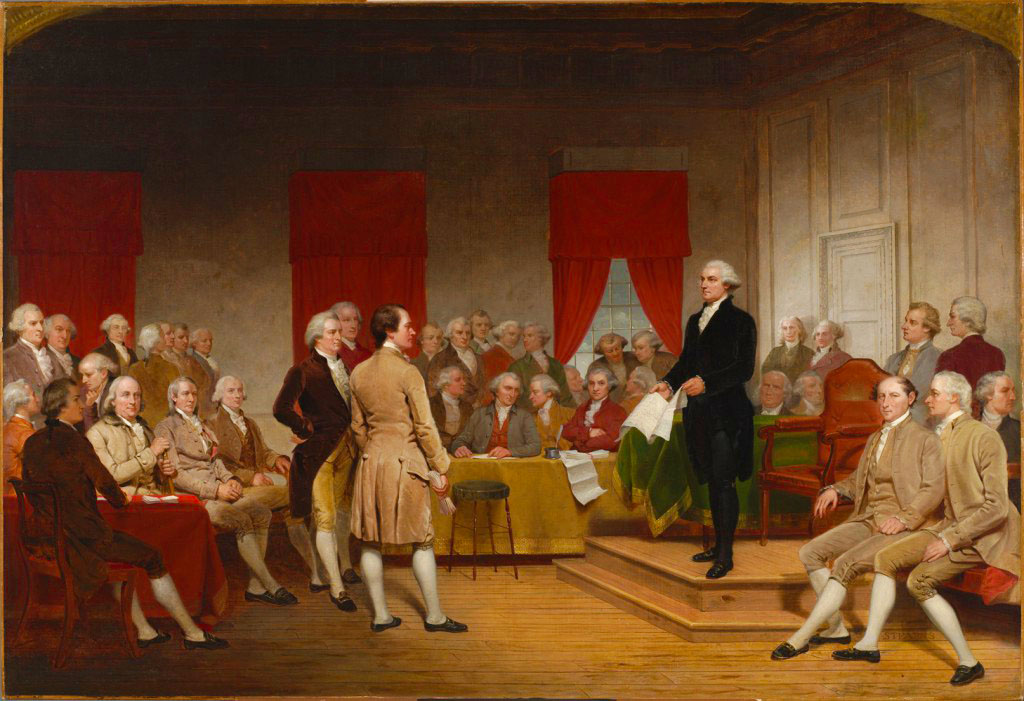
How much of this can go around? Image from Texas A&M University, which makes it a government document and therefore, if I understand correctly, public domain.
The Paragon puts in stealthily at Divvytown, and Brashen summons Althea to him after sending the rest of the crew, save a small watch, below deck. They confer, more about their romance than about the work at hand, as they survey the town and plot their landing party. Amber and Clef are excluded, as are Lavoy and Artu; Jek and a handful of others are to be brought along, and Lop left with orders to get Clef ashore if there’s trouble. The landing proceeds, with Brashen issuing and affirming orders to his selected crew, adopting a braggadocio act when confronted by local authorities appointed during the town’s reconstruction; he successfully plies the locals as Althea turns over what they learn in her head and reluctantly reassesses the possible situation with the Vivacia–as well as Kennit. The news from Bingtown takes her aback, as well.
After the local authorities approve of them, Brashen has his landing party disperse to gather information and gives orders to take on provisions. He also confers with Althea as the two of them surveil the town’s streets together. She is taken by the image of what could be that she sees reflected in windowglass as they do. And as she learns of her brother-in-law’s fate, she sorrows for the crew lost and for her sister–but not for the man, himself.
At the dock, Paragon muses over the oddities of time and his blood-borne connection to Kennit until disturbed by a gig from the town, one person aboard which identifies the ship as having been Igrot’s. The assertion upsets the ship, and the noise of the upset reaches Brashen and Althea in the town. They hasten towards the ship and are greeted by Clef, Jek, and all but two of the other landing party members; they return to the ship, where Lavoy confronts Brashen and assails him before leaping overboard–and a number of crew join him as the Paragon flees Divvytown under full sail.
This is not the first chapter of a Liveship Traders book to be titled “Divvytown.” The one that is, here, and the changes from the earliest appearance to the present chapter are marked. Kennit has clearly made an impact upon the place, and, as Althea is reluctantly obliged to consider, not all of it is for ill. Indeed, much of it is for good, in itself. That does not elide the ill Kennit has done and is yet doing–the chapter presents itself as contemporaneous with the trip to take Wintrow to Others Island, giving a sense of how the component parts of the novel fit together–and it is good to remember that it is too much to expect that the extraordinary will only be so in one direction. Then again, working to erect what amounts to a nation demands a certain degree of hubris; there are presumption and arrogance inherent in the notion that one person’s ideas are good enough to rule others by. Too, it is long known that a certain ruthless pragmatism is required in a great many endeavors.
I am reminded, however, that manure is often used to fertilize, and plants that bear good fruit grow well from having shit at their roots.
I spent quite a while teaching, as I have noted in this webspace and elsewhere, and no small amount of that teaching was in a class I was never actually trained to teach: Technical Writing. I had no coursework in it as an undergrad or as a graduate student, but got thrust into it while I was completing my doctoral work. Coming up to speed teaching it took a little bit of doing, and, in retrospect, I have pity for those poor students who first suffered through my learning how to teach a course for which I had no preparation; I apologize to you for my inadequacies, whether or not you are reading this.
Yeah, this kind of thing. Photo by Pixabay on Pexels.com
As is often the case when something new emerges, I fell back on what I knew to start teaching the course–in this case, roleplaying game materials. I’d done it at other times, as I’ve attested, and, at some points (for example), I used RPG materials in classroom exercises in my technical writing classes–usually as examples of layout and ease-of-use, maybe for interrogation of audience–as in my more “normal” English (i.e., composition, literature) classes. Things may not have always gone over well–some sets of students took better to “nerd” pursuits than others–but they always got across the points I meant to make, and they provided concrete examples to help my students understand what to do and what not to do, both of which are important in fostering learning. So that much was successful in my teaching, and I should be pleased to have had that much success, at least.
But as I have been thinking on the matter, for reasons I’ll not get into here, I have realized I missed out on what would have been one hell of an opportunity to work with the technical writing classes (even if it is something I would’ve gotten…spoken to…about–but I got…spoken to…several times as it was; I might have had a bit more fun with it). I could have had my students design games or gaming modules and playtest them for each other, which would have offered them no small amount of practice in parsing directions, writing directions, testing those directions out, and working through the other kinds of work they were asked to do by curricular dicta.
A fairly common set of assignments in technical writing classes–both from my experience and from the reading I did years ago to try to support my suddenly emerging experience–includes a set of instructions, a project proposal, and a project report. Sandwiched between the latter two would (ideally–but how often we fall short of ideals!) be the execution of the project proposed. To my mind, the instructions could be that project, with the proposal outlining what is to be given instructions and how and the report being made from attempts to execute those instructions. And if those instructions happened to be a RPG or a module for an existing one…
As the saying goes, “trust Data, not Lore.” Gif from Reddit.com, here, and used for commentary.
The way I’m envisioning it (from the vantage of it having been a while since I’ve had to write a syllabus from scratch–though I’ve done such things several times), students would be asked to complete major assignments as noted above: project proposal, instruction set, and project report. For the proposal, they would have to note whether they would develop a new RPG or a module for an existing RPG (the latter being more likely, the more so for a more compressed class). The instructions would be the actual gameplay; while I follow Mackay in calling RPGs an art, I acknowledge the necessity of rules in them–and what are rules but instruction sets? The report would, as gestured towards, detail play; it would note what led to the proposed project, give a description of the project and the playtest, and discuss results–what went well, what went poorly, and why. Formatting and usage concerns would be assessed as might be expected, with differences chiefly between the instruction set and the other documents; concerns of audience would necessitate dramatically different presentation there. Students would have experience with producing writing to order in genres not necessarily familiar to them, something common to people who try to make their living writing–and I am often told that making classroom activities mimetic of real-life practice is a good thing. Students of such a mind would have a portfolio object. And I might have both samples for future use (always helpful when teaching) and grist for the mill of my own gaming.
Such is not likely to be, of course. I am doubtful that I will be at the front of a technical writing classroom again, after all, or really any. But that does not mean I do not dream–and that working more on developing such a course is not without merit. It might help me get more of the kind of work I still like to do…
Read the previous entry in the series here. Read the next entry in the series here.
A content warning is likely in order.
The chapter that follows, “Surviving,” begins with Keffria and Selden talking on the deck of the Kendry as the liveship approaches Bingtown. The harbor is desolated, the ruined hulks of ships visible in the water and the lingering damage to the town visible, as well. Keffira frets for her family, the fates of most of whom are uncertain to her.
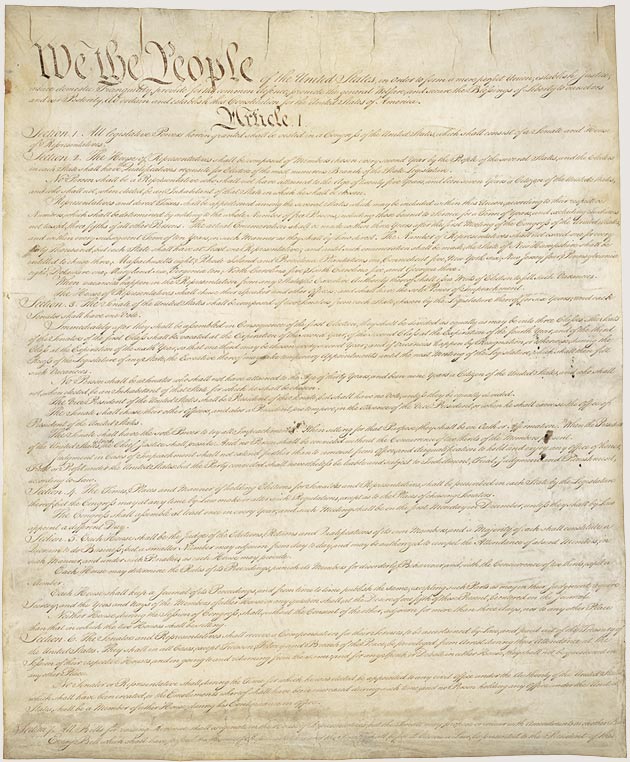
This seems to be evoked… Image from the US National Archives, which I’m pretty sure makes it public domain.
Reyn and Jani are also aboard the Kendry, and they confer about their own mission to beseech aid as they approach the injured town. Trehaug is in dire economic straits, the earthquake having rendered the retrieval of Elderling artifacts impossible, and the extinction of the Rain Wild Traders looms. Keffria invites the Khupruses to lodge with her, which offer they accept, and Grag Tenira arrives to spirit the group away under cover–and to the waiting Ronica.
Aboard the Chalcedean ship, the Satrap whines; at Kekki’s insistence, Malta offers some gentle advice and comfort, musing on their unpleasant situation and tending to the Companion as best she can. The value of Kekki’s advice is made clear as Malta rehearses an assault upon her. The Satrap continues to treat her as a servant, and Malta is accosted again; she falls, opening a wound she has been considering for some time. As she makes to bind it, she realizes that Kekki has died as the Chalcedeans hail another ship.
In Bingtown, Serilla takes lunch and considers her worsening situation. Roed Caern grows increasingly cruel and paranoid as many sets of machinations unfold; she wonders how to place herself among them in the wake of a message from Mingsley. She also considers Ronica, musing on the older woman’s wisdom.
Grag and Reyn confer as the latter makes ready to join a gathering. They exchange tidings, including Reyn’s certainty that Malta is dead. Similarly, Ronica affirms herself to Keffria and reminds her that she, not Ronica, is the Vestrit Trader. And at the gathering, Keffria takes her rightful place, despite her pain and loss. News is exchanged and counsel taken for how to proceed; the potential for a break from Jamaillia and a new system of rule for Bingtown is discussed, and Reyn, at Selden’s prompting, begins to explicate some of the longer history of Bingtown and the Rain Wilds.
I am again taken by the similarity between events unfolding in Bingtown and what I remember being taught and reading later about concerns surrounding the Revolutionary War. (I am aware that what I was taught was markedly jingoistic in addition to being simplified for consumption by children. The latter is excusable, even perhaps necessary; the former is not. And, recall, I grew up in small-town Texas–for good and ill.) I’ve noted that in other work–and I’ll get to that work, worry not–Hobb makes much use of early US history to inform her fictional milieu; I haven’t done the reading to the extent that I should (yet) to confirm it, but it does not stretch credulity to think that Hobb is doing much the same thing in the Liveship Traders novels that she does in the Soldier Son series. And she seems to be offering some corrections, being explicit in the incorporation of women in the proposed renewed Bingtown as equals–formally and legally, not just conventionally–and noting usefully that “A manner of speaking becomes a manner of thinking.”
Indeed, that comment is more true than many people want to believe. I don’t necessarily fully subscribe to Sapir-Whorf, but it is an idea that merits more thought than most afford it.
Read the previous entry in the series here. Read the next entry in the series here.
A content warning may well be in order.
The succeeding chapter, “Alliances,” begins with Brashen conferring with the Paragon, trying to elicit some reaction from the figurehead as the sentence of isolation relaxes. The ship tries to wound the captain with words, but fails; Brashen’s melancholy has already cut him. They reach an uneasy detente of sorts, though it seems to satisfy neither ship nor captain.
Not a welcoming thing, no. Image taken from Giphy.com, used for commentary.
Elsewhere, Tintaglia soars about the waves, considering her situation, the need to find the last young of her species, and the changes to the geography from what she recalls in her ancestral memories. She muses with disgust on humanity before encountering a serpent that has gone almost completely feral, trapped in a backwater and raging at her as she tries to aid it. Her efforts are of no avail, and she performs a final mercy on the serpent, tasting the lingering despair of his existence as she does so. Departing, she begins to consider how humanity might be brought to the dragons’ aid.
Aboard the Paragon, Lavoy reports to Brashen. The captain issues a series of directives to the mate, most of which are not to the latter’s liking. After dismissing Lavoy, Brashen considers the coming conflict with Althea with trepidation and longing.
For her part, Althea manages her watch and muses on her situation with Brashen. She muses over the crew assigned to her, assessing their strengths and weaknesses evenly, and Brashen informs her of the imminent rescinding of the isolation order for the Paragon. Althea accepts the order and considers its likely impact on the sullen Amber before her thoughts turn toward the Vivacia and the plan to retake her. When Brashen issues his orders, including the change in watch-crews, Althea seethes but holds her peace; she seethes more when, as she comes off watch, Clef conveys a summons to the captain’s quarters.
Althea reports as ordered, and Brashen invites her to voice her complaints to him. After a bit of prodding, she does so, somewhat vehemently. Her complaint–that he had shamed her by ordering her back from battle–provokes an unexpected apology that shifts into an anguished declaration of love from Brashen. That, in turn, moves into an assignation that leaves Althea feeling nearly fulfilled.
On the foredeck, Amber confers with the ship, trying to explain the finality of death. The ship is aware of and confused by what Brashen and Althea do in the captain’s cabin, however, and is distracted from the conversation thereby.
I am aware that, as a reader, I am supposed to be in favor of Althea and Brashen re/beginning a romantic relationship. Certainly, the novels have thrust the two of them together repeatedly and given them opportunities to fall in and out and in again. But I cannot help but read the encounter between them in the current chapter as some combination of contrived–it’s a novel; of course it is–and harassive. Brashen is the captain of the Paragon; Althea is second mate and therefore under his direct command as an officer in the ship’s complement. She is not in a position to be able to refuse his advances, really, and a diminished capacity to refuse them necessarily makes for questions about their acceptance. Certainly, were I to act so in my leadership role, I would (potentially) provoke harassment proceedings; the lack of an analogous legal recourse within the milieu of the novel does not mean the act is less–questionable? Reprehensible? Illicit? Immoral? Wrong? I am not sure what word applies here, really, but I am sure that the passage in question is…uncomfortable reading, even for me. How it would strike people more directly touched by such acts in their own lives, I am not sure I am equipped to consider.