Read the previous entry in the series here.
Read the next entry in the series soon.
The fourth chapter of Forest Mage, “The Fast,” starts as Nevare, escorted by his elder brother, reports to the work detail led by Sergeant Duril. The surroundings and work are described as Nevare joins the tasks, and Duril privately expresses his surprise at Nevare’s appearance, to Nevare’s shame. But the work continues through the day, and when Nevare returns to his room at the end of it, washes up, and surveys himself, finding himself much changed from even his expectations and puzzled at how the changes have happened.
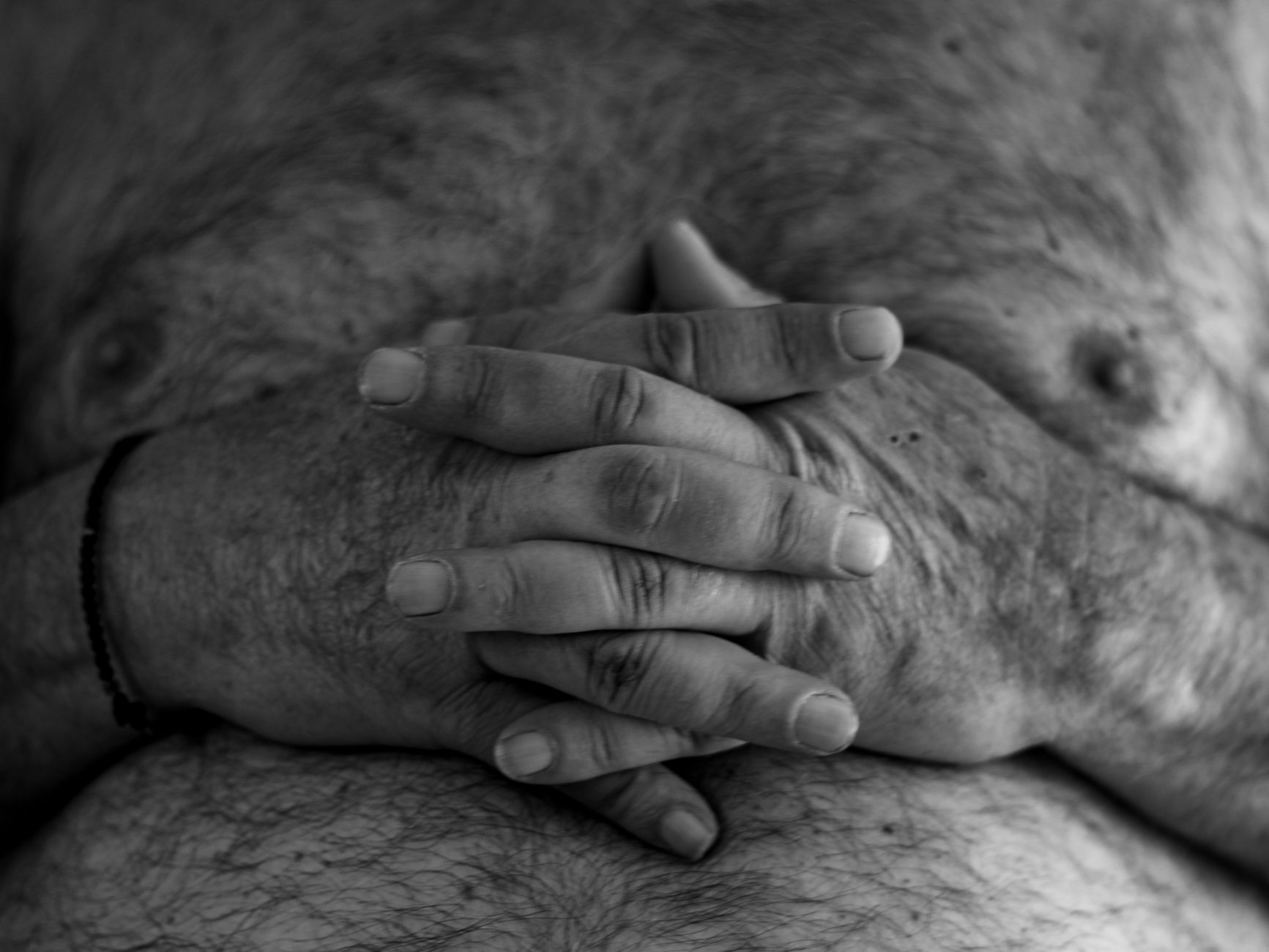
Photo by u0391u03bbu03b5u03beu03b1u03bdu03b4u03c1u03bfu03c2 u039cu03b1u03bcu03bfu03c5u03bdu03b7u03c2 on Pexels.com
Having thus diverted himself from his intention to join his family at dinner, Nevare repairs to the kitchen, thinking to drink only water. He does drink a mugful of milk before trying to fill himself on water, but it does not satisfy him, and he withdraws to his rooms to make a journal entry and assess himself. He compares himself to Gord, noting the latter’s inexcessive eating, and determined to go out for a walk on the property. Along the way, he overhears his father’s displeasure, and goes outside, walking amid property he has helped tend.
While considering a pond he had known to be full of fish, Nevare finds himself beset by Yaril. Her ire confuses him, given their previous closeness, and he attempts to defend himself against her assertions of his ill intent. She presses upon him, upbraiding him with the political ramifications of his appearance, and words grow heated between them surrounding their expected marital prospects. Yaril leaves, and Nevare sits, considering her words and the folly of a fish-pond amid the semi-arid plains.
Selethe soon joins Nevare, speaking softly to her son. She notes her surprise at his appearance and summons him to her sewing room, where she speaks of seamstresses who had been hired in preparation for the coming wedding and takes measurements from which to make Nevare a new suit in haste. Selethe ascribes Nevare’s fatness to bad food at the Academy and his convalescence, and she notes having interceded with Keft for him. Soon after, he takes his leave, drinking water again and again finding no satisfaction from it.
The next day, Nevare reutrns to work, faring badly at it. After the work day, he has to avoid the kitchens despite his hunger, and he washes carefully before reporting to his mother’s sewing room and the attentions of the seamstresses. After an embarrassing interlude there, he withdraws to his bed, dreaming as his other self and recognizing the victory earned at the Dancing Spindle.
The following day repeats Nevare’s work experience, and through his exertions, he arrives at the idea that the Academy had stripped him of his self-discipline. He falls into self-recrimination, but he uses it to return to work with vigor, delighting in punishing himself with the effort. He finds when he returns to his mother’s sewing room for final fittings, however, that his efforts have not changed him, and he despairs of Carsina. Again, he compares himself to Gord, and when he returns to the sewing room as he had been directed, Elisi upbraids him. Selethe admits that having to make a new suit for Nevare has left them with insufficient time to prepare Elisi’s outfit to make an effective presentation to a visiting noble. Efforts to prepare for the wedding continue, and Nevare is, at last, sent off for the evening.
To address the chapter-length issue: the present chapter, in the edition of the novel I’m rereading, runs 17 pages in length, approximately 2.33% of the novel. There is perhaps some irony in so slim a chapter focusing on concerns of fatness to the extent that it does, although it might well be read that the text is being pared down as much as it is hoped Nevare will soon be. I’ll admit, though, that that might be over-inflating something that is merely coincidence, but even if it is mere coincidence, it’s something that bears some comment.
Also, for indexing purposes, the following: Alfalfa, Carsina Grenalter, Cilima Lading, Clover, Derwith Toller, Dr. Amicas, Elisi Burvelle, Eron, Gord Lading, Honeysuckle, Kase Remwar, Keft Burvelle, Nevare Burvelle, Old Thares, Poronte Family, Rosse Burvelle, Selethe Burvelle, Sergeant Erib Duril, Speck plague, Specks, Tree Woman, Widevale, Widevale Hall, Yaril Burvelle. A brief chapter might well be expected to have relatively few indexable items, and the present chapter meets expectations.
It’s time for affective reading again, it seems. I recently to this writing had a series of medical appointments. In them, I was reminded of being overweight–clinically obese, in fact–and that some health problems are starting to crop up in relation thereto. I don’t have quite the animus directed at me that Nevare does in the present chapter, having quite a bit of support as I begin working in earnest to take care of my overweight and my other incipient (and not-so-incipient, as it happens) health problems. There are challenges, though, and I don’t know that I’d do terribly well without the kindness and compassion of those in my life. I am grateful to have it. The present chapter reminds me that I should be thus grateful.
I will again refer to Metsäpelto here, the present chapter once again putting on display a variety of Gernian attitudes toward fatness that echo those present in the late nineteenth-century United States, echoing those in Victorian England. In the case of the Victorian English, part of what informs attitudes towards fatness is a reaction against Regency norms and excesses, a motion towards self-restraint and “decency” and away from the perceived immoralities of the recent past. Fatness is viewed as an indication of excess, thus of indecency, as attested by William Banting in his Letter on Corpulence, Joyce L. Huff in “Fat,” Peter R. Stearns in Fat History: Bodies and Beauty in the Modern West, Georges Vigarello in The Metamorphoses of Fat, Garabed Eknoyan in “A History of Obesity, or How What Was Good Became Ugly and Then Bad,” and elsewhere. The scholars note that such attitudes arise in force only in the later Victorian period and the post-Civil War United States, Stearns situating it specifically following 1890 (which reinforces some of the suggestions of more specific antecedents for Gernia noted in Shaman’s Crossing‘s “A Ride in the Park,” although the note must be repeated that Gernia borrows from the nineteenth-century United States rather than reflecting it precisely). They contrast in force with both earlier understandings of fatness (being more concerned with mobility than with girth as such) and ancestral regard for obesity as signifying sufficiency of food.* Such makes the Gernian disdain for fatness make more sense; Gernia, as presented, is very much about adherence to norms, to self-control and differentiation from indigenous lifeways, and the Burvelles are presented as being more concerned with such things than most. The vehemence against fatness** is not more comfortable for having such a context, of course, but the context does matter.
I’ll note also a strange myopia as regards how Nevare is expected to address his fatness. While several characters acknowledge that a scant few days is not enough time to lost all of the fat Nevare “should,” most do seem to think there will be a noticeable difference in him in those few days with work and short rations. For his part, Nevare does make a good faith effort to heed his father’s commands, starving himself for days as he does hard manual labor in the sun and heat. Having picked up rocks in the sun, I know it is no easy thing to do. I know, too, that I did not lose weight from it, at least not in the course of a few days. Water weight might be shed so quickly, but even then, doing so comes at costs–including some of the same symptoms that Nevare shows of weakness and fogged thought. It’s not healthy, even in the short term, and it’s not really sustainable.
* Indeed, the evident preference for fatness among the Dappled People is suggestive of their adherence to such regard. Later portions of the reread will treat this.
** There is some vehemence even when encountered in moderation, as in Selethe’s opinion of Nevare’s weight as stemming from the circumstances of his convalescence. She, at least, seems to regard it as a thing that has happened to him, rather than as a thing he has done to himself; she does not decline to regard it as a problem he must solve, however, nor yet does she conceal her distaste for even her supposedly favored child due to his fatness.
I’ll keep reading and writing, and I’ll keep doing so for you, if you’d like!


 Elliott RWI
[…] Read the previous entry in the series here.Read the next entry in the series here. […]
LikeLike