A Robin Hobb Rereading Series, Entry 499: Assassin’s Fate, Chapter 40

Read the previous entry in the series here.
Read the next entry in the series
here.


A brief adage from Chalced precedes “Warm Water.” As the chapter itself begins, Nighteyes complains of boredom as he is obliged to wait with Fitz for death to come. Fitz notes being surprised to still live, rehearsing his situation in some detail. He and Nighteyes confer internally, the wolf urging him to make a decision and act upon it rather than simply waiting, and Fitz searches what he can reach for some tool to help him. He encounters the titular warm water and is surprised again, attempting to determine its source. Belatedly, he realizes it is a bit of Elderling magic, and he settles into reverie and self-pity for which the wolf rebukes him.

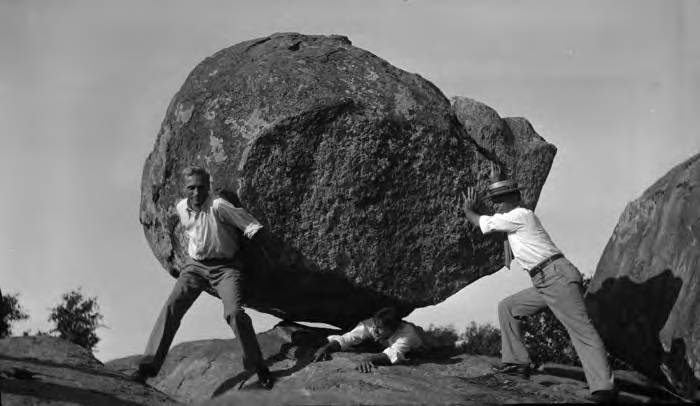
Maybe?
Photo by Rostislav Uzunov on Pexels.com

Fitz soon finds out, the hard way, that Chade’s exploding powder can detonate underwater, spurred by the Elderling magic, and the Silver that he had carried splashes all over him. Nighteyes reminds him afterward that the Silver has afforded Verity and the Fool abilities to reshape and rework objects, and Fitz applies himself to reshaping his surroundings to permit his escape. So freed, Fitz slowly pushes forward in an attempt to reunite with the Fool and Bee, and he recognizes the impact his exercise of magic has had upon his body.

At length, Fitz emerges into open air and sees the ruin of Clerres. He also sees the Vivacia pulling away, and he attempts without success to Skill to Bee. Fitz further spies Motley, and Nighteyes remarks that the crow has seen him. He and the crow confer brokenly, and the crow delivers food to him. Drinking from a spring afterward, Fitz encounters Prilkop, who shares food with him amid an awkward conversation. Fitz learns much of recent events from it, and Prilkop mourns what good there had been in Clerres that has been lost with its destruction.

The two part with respect but not friendship, and Fitz finds Capra in the night. An assassin yet, he takes fatal vengeance for the Fool and for Bee, then departs.

The brief prefatory comments put me in mind of JC 2.2.34-35, the comment that “Cowards die many times before their deaths; / the valiant never taste of death but once.” I’ve written before about Shakespearean correspondences in Hobb’s Realm of the Elderlings corpus, if with a different focus and a narrow scope due both to the structures of conference papers and the fact that fewer of works existed in the corpus at the time; it is, again, perhaps another scholarly someday that I would return to and expand upon said conference paper with the fuller works in place. That there should be such evocations is unsurprising; there is a reason that so much ink is spilled across so much time about how Shakespeare pops up after himself, and given the privileged position Shakespeare’s works continue to occupy in such conceptions of English-language literary canons that persist, that Hobb would make use of such resonances, consciously or not, is almost inevitable.

The latter parts of the chapter command some attention. The ending, with its comment about the half-chicken Fitz purloins from the slain Capra, strikes me as particularly funny. There’s something about the juxtaposition of the simple pleasure in tasty food and the grim, magically-enhanced work for which Fitz has long been trained and in which he has been reportedly adept that prompted laughter from me–although I admit to being primed for such things, having been steeped in Jenkinsian lore and having written a paper I wish had been published but that led to some useful tutorial materials, at least. And perhaps it is the case that such bits of humor point towards expectations about primary audiences, as well, another in a long series of scholarly somedays.

I am taken, too, by Prilkop’s near-fawning over Capra in the wake of the destruction of Clerres. That Prilkop prizes parts of his ancient home has been clear for several chapters, and he is not in error to point out that there were many in Clerres who could not rightly be held accountable for the many heinous misdeeds done by the Servants, their chosen Prophets, and the cult surrounding both. But for him not only to take delight in people surviving the dragons, but also to lionize Capra’s assumption of unitary leadership and to believe her promise of return to older ways (716), strikes me as…naïve, at best. Given the color dynamics at work (and acknowledging the ways in which earlier portions of the Realm of the Elderlings corpus), I find myself in mind of Uncles Tom and Ruckus, and it’s a markedly uncomfortable line of thought for me. That it is presented as a negative helps to some degree, but that there is still the invocation of such a stereotype…as I note, it’s not comfortable reading for me.

I remain available to write for you; fill out the form below to begin!

← Back

Thank you for your response. ✨

Or you can send your support along directly!

A Robin Hobb Rereading Series, Entry 498: Assassin’s Fate, Chapter 39

Read the previous entry in the series here.
Read the next entry in the series
here.


Comments about the Treasure Beach on Others’ Island precede “The Vengeance.” The chapter returns to Bee as she watches what the dragons do that emerge from the Paragon, and she assesses her situation as she directs Perseverance to seek what can be found amid their tumultuous surroundings. Survivors begin to gather and take stock of their collective disposition, and Bee sours on the Fool. Kennitsson’s death is reported, as is the poor condition of the son of Althea and Brashen, and the Fool and Bee confer about their loss, Bee souring on him yet further, and rapidly.

Nothing so kindly or quaint as this, no.
Photo by Thanh Binh on Pexels.com

Bee continues to watch the dragons wreak ruin on Clerres, and those that emerged from the Paragon are joined by Heeby and, unexpectedly, by Icefyre. Motley joins the onlookers as Icefyre enacts his own revenge on Clerres, and the crow soon flies among the dragons as Prilkop emerges to offer Bee and her companions assistance. Prilkop urges the Fool to sue for peace, but the Fool replies that the dragons will have none of it, and Tintaglia joins the fray. The Fool urges Prilkop and his own companions to flee, and Bee speaks her own recriminations of Clerres.

Conversation is interrupted by Brashen’s recovery and his son’s report of events to him. The dragons’ ruin of Clerres continues around her and her companions, during the night and into the morning. In the morning, the dragons that had emerged from the Paragon claim the body of Kennitsson, consuming it and his memories, and one of them shares his name, Karrigvestrit, adopting the ship’s family’s name as part of his own. The dragons depart, and the survivors begin to take care for themselves. Bee finds, to the surprise of most assembled, that she can heal with the Skill. Rapskal joins the group, offering awkward condolences and reporting the imminent arrival of the Vivacia before joining those assembled in remembrance.

Bee wakes the next morning to breakfast served by Perseverance and a report from him. Part of the report is that the Fool has sought Fitz again; the Fool returns, unsuccessful, and Bee hardens her heart against him.

The prefatory materials of the chapter call back to the beginnings of the Liveship Traders novels, laying out explicitly the rules Kennit violates in his own trip to the shore in question. As at several earlier points in the Realm of the Elderlings corpus, there is an impression with them that the rules are of advanced age; they are presented in the current chapter as if in translation, and in their earlier appearance, they are presented as long-known lore. It is another implication of the long term at work in the Realm of the Elderlings, one reinforced by Icefyre’s comments and the Fool’s about the ways in which Clerres worked to commit what amounts to genocide on the dragons. Icefyre, after all, had been encased in the ice of Aslevjal long enough that his image had faded to a dull shadow under the ice and reports of his presence had become tales told by the old around the fire at night, and even though it is made clear throughout the Realm of the Elderlings novels that dragons inherit memories from their forebears and from what they eat, his tirade is plain that he was, himself, present at Clerres as dragons were slain by deceit and trickery. It is the case that language seems to change more quickly in the absence of mass media than in its presence; consider the differences between Wulfstan’s English and Laȝamon’s, Laȝamon’s and Chaucer’s, Chaucer’s and Malory’s, or even Malory’s and Shakespeare’s, then between Shakespeare’s and that of Wordsworth or Coleridge, and note how much remains from the earlier to the later. But given that there are characters present in the novels who live centuries and more, and that the passage of generations is remarked upon, there still has to be a long time involved.

I suppose it is something that emerges as a frustration of Hobb’s motion away from the Tolkienian tradition, something certainly clear in earlier series as I have remarked once or twice (and probably will again). Then again, Hobb herself notes her indebtedness to Tolkien, and I have noted, too, that, despite her motions away from the Tolkienian tradition, Hobb works in conversation with it. That she works over long scales of time is not unlike the chronologies presented in the appendices to The Lord of the Rings and in The Silmarillion–and there is a correspondence to the latter in the present chapter, as well, the description of Icefyre as he arrives at Clerres reminiscent of descriptions of Ancalagon the Black. But there is no heavenly mariner to send him tumbling to the ruin of mountains, no shining savior to plead before gods for release from evil. And there are still many other ways in which Hobb moves away from The Professor, even as there are some ways in which she remains clearly his student.

Want me to write for you? Fill out the form below!

← Back

Thank you for your response. ✨

Or you can send your support along directly!

A Robin Hobb Rereading Series, Entry 497: Assassin’s Fate, Chapter 38

Read the previous entry in the series here.
Read the next entry in the series
here.


An account of an early White Prophet introduces “Ship of Dragons.” The chapter begins with Bee regaining consciousness as the Fool talks to her, the experience painful to her because of the number of potential futures he represents. The Fool reports to Bee about Perseverance, carefully avoiding mention of Fitz until he is pressed directly for it and relates his expectation that Fitz is dead. Bee rails at the assertion, but as she searches within herself for the touch of his magics, she begins to accept that her father is gone.

I do love this artist’s work!
Katrin Supernova’s The Tunnels, here, used for commentary

At length, the pair reach Lant, and the Fool urges more haste to escape. Lant bears Bee on his back, escaping the fortress of Clerres into the surrounding countryside, where they meet Spark again. The Fool relates their expected course of action: return to the Paragon and make for Buckkeep. Bee is told that she is an aunt, and Perseverance is collected. Escape continues, and the Fool muses on the arrogance of the Servants and relates the depth of the Skill-healing Fitz forced upon him. Bee finds herself relegated to being a child who must be protected, which chafes at her, and the matter of Prilkop’s whereabouts receives attention; he had fled, but to where was not marked.

The group reaches one of the Paragon‘s boats and are welcomed aboard. The boat reaches the liveship, and its passengers board. Bee is taken aback by the liveship but soon confers silently with the craft, exchanging news. The liveship begins to transform into the pair of dragons from whose cocoons it was made, and Per takes Bee to her cabin, leaving her to assess herself and her situation. She remarks what Fitz had brought with him to save her, sorrowing over some things and exulting in the presence of her books.

Bee’s reverie is cut off by an attack befalling the liveship. She reluctantly surrenders the Silver that had been promised to Paragon, noting the power it could have offered her, and Kennitsson relays it to the figurehead. As he, joined by the son of Brashen and Althea, does so, Bee, Per, and the Fool flee the ship. Swimming away, Bee sees the liveship assailed and burning, and as the ship sinks, two dragons rise from it and begin to go about the work of destroying those who assail them. Bee watches the dragons at their work with some satisfaction as those around her work to retrieve survivors.

The prefatory comments of the present chapter once again prompt attention. Although it is not explicitly stated, it is clear to me that Gerda and the people whom she serves are the forerunners of the Chyurda; the description of Cullena, her attitudes, and the people that spring from them seem very much in line with Kettricken’s people. Deszcz-Tryhubczak writes about them, and the texts of the Realm of the Elderlings corpus support such an assertion, with examples here, here, and here, among others. That the White Prophets are known among the Chyurda is itself such an indication; the “religion” is not known in the Six Duchies during the Farseer books, and if it receives attention in the Liveship Traders works, I do not recall it at the moment. The Chyurda are further removed, geographically, from Clerres than are Buck, Bingtown, or Jamaillia, yet they are aware of the “faith”; the easiest explanation is that there was some sort of mission from Clerres to the Mountain Kingdom, and the account of Gerda presented in the preface offers some confirmation thereof. It is likely a back-filling, part of an effort to connect and unify the Realm of the Elderlings novels across themselves (and one that is not always successful, I admit; see this and this), but it is something that, at least for me, works well enough.

In the chapter, proper, there is a lot going on, and it contrasts sharply with the remarkably brief chapter it follows. I have to wonder, in fact, if it might not have been better divided into two chapters, given the pivot of Bee in the cabin; she suddenly shifts from contemplation to flight as the attack on the Paragon gets underway. I can understand, in terms of structure, that that might not be advisable; the novel prior had largely worked to alternate chapters of narrative perspective. (That it does has some resonances that frustrate interpretations of the narrative’s relation, as I’ve gestured towards previously. If it is the case that the Farseer novels are Fitz’s papers written between the end of that series and the Tawny Man novels, and the Tawny Man novels are written between that series’ ending and the beginning of the Fitz and the Fool novels, when are the recollections and notes that comprise the Fitz and the Fool novels written, and by whom? The perspective of rereading and the foreshadowing at work even for a new reader suggest that the obvious answer is not the correct one.) Adding another Bee-centered chapter would disrupt that rhythm, even as it would also move the narrative toward being more Bee’s than Fitz’s, and that might not be the worst movement to make, given context.

And, to return for a bit to affective reading: I feel for Bee. Poor kid. As the father of a daughter, and one of whom I am quite proud, I know that the day will come when I leave her, whether I want it to be the case or not. I know that she will not be able to know me the way Bee knows her father; we are close at present (she will be a teenager relatively soon; I have some idea what’s coming), but even with that closeness, we do not share thoughts and emotions the way the Skill allows. I hope nonetheless to be and to have been such a father as will make my absence a sorrow to her, even as I want her not to mourn much at my passing–but I would not begrudge her satisfaction at the fall of those she believes undo me, if that should be what happens. It’s fantasy, for the most part, of course, but even in fantasy, there are things for which to strive in “real life.”

I’ll conclude with a short note: Happy Tolkien Reading Day (again)!

Join those who have gotten help with their work! Fill out the form below!

← Back

Thank you for your response. ✨

Or you can send your support along directly!

A Robin Hobb Rereading Series, Entry 496: Assassin’s Fate, Chapter 37

Read the previous entry in the series here.
Read the next entry in the series
here.


Information about the Pocked Man legend in the Six Duchies prefaces “Touch.” The chapter begins with Fitz regaining consciousness as the Fool seeks him out, bearing Bee. The two confer about their situation, and Fitz assesses Bee’s condition through the Skill, finding her only stunned. He and the Fool fare far worse, and Fitz constrains the Fool to accept Skilled healing and to take Bee and flee. He and Nighteyes confer internally as he does so, and when that work is done, he starts to sink into welcome oblivion.

Apt.
Photo by Rahul on Pexels.com

The prefatory comments of the present chapter call back to much earlier portions of the Realm of the Elderlings corpus, notably the early incidence of Forgings, Regal’s depredations on Buckkeep, and the death of Shrewd. The clear implication is that one or another of the members of Fitz’s group is being made parallel to that figure, and Fitz and Bee are the most likely candidates for being so (and in that order). The present chapter does not do much to reinforce that implication for them, however. Both are scarred, certainly, and Fitz has gotten to enjoy another encounter with Chade’s exploding powders, the very things that made him an image of the Pocked Man. Both Fitz and his younger daughter have been death-bringers in Clerres, but that has not been new to the present chapter. Why the image appears again when it does, then, does not swiftly become clear.

As I think on it, perhaps it serves as a counterpoint to Fitz’s brief prayer to Eda, made over the head of his younger daughter. It’s still uncommon for him to voice religious feeling, and Fitz remarks upon as much in the text, so the occurrence is marked. Given the repeated assertions that Eda and El coexist, there is some sense in presenting a figure tied to El in a chapter that features a rare prayer to Eda in its five-page span…but it still strikes me oddly.

I remain happy to help you get writing done at reasonable rates and without AI slop! Reach out through the form below to get me on board!

← Back

Thank you for your response. ✨

Or you can send your support along directly!

A Robin Hobb Rereading Series, Entry 495: Assassin’s Fate, Chapter 36

Read the previous entry in the series here.
Read the next entry in the series
here.


Complaints from Chade regarding the slow progress of research into the memory cubes retrieved from Aslevjal open “Surprises.” As the chapter, proper, begins, Fitz steels himself against the task presenting itself to him, Nighteyes offering wry comments within as Fitz make preparations to draw off and dissuade pursuit of Bee. Per and Spark join him, to his annoyance, and Spark makes some adjustments to his plans before helping Per to help Fitz away. Pursuit finds them and begins to engage but is caught in the trap Fitz and Spark had set up.

Wrong kind of boom.
Photo by Nairod Reyes on Pexels.com

Fitz is slowly brought back to Bee, with whom he confers again as efforts to effect escape form Clerres continue. She glosses her treatment, and Fitz conveys what news he can before he dozes off. He wakes to find himself in communion with Bee and appreciative of her strength in the Skill. Work to effect escape continues, and there is more conversation among Fitz, Bee, and the Fool, turning to prophecies and Catalysts. Bee is attacked by a released prisoner, and the prisoner is killed, to Prilkop’s sorrow. Kill totals are wryly calculated, and Fitz finds himself unable to assist the escape efforts.

At length, an opening is made into a secret tunnel, and Perseverance and Bee proceed therein. Work to widen the opening continues, and Spark joins those moving ahead. As the opening is widened further, Fitz sends the rest ahead. The Fool rejoins him, and the pair proceed, only to be told that their situation worsens. Fitz determines to proceed onward, and he is spurred by an explosion behind him.

As often happens, the prefatory materials attract some attention. It is remarked at a number of points in the Tawny Man and Fitz and the Fool trilogies that Chade had been reckless in his study of the Skill once it was made open to him, in part because he had been denied it due to his bastardy, in part out of a desire to mitigate the damage age and his particular lifestyle had done to his body, and in part because he was prone to obsession, particularly as regarded the acquisition of knowledge. The second part is perhaps the most germane to the circumstances of the chapter; Fitz comments that his body is sapping its strength to heal his wounds, repeating a process that has been at work in him since he had been ineptly healed decades before. (Chade had soon after attempted such healing on himself, if with less error due to calmer circumstances.) There is a useful warning against rushing headlong into knowledge not fully explored in the example, even as Chade’s complaints betray an eagerness to thus rush–but he is not wrong that those with greater experience and breadth of knowledge might do better to accurately classify and identify materials than apprentices, who are by their very nature less informed than they might be. There is a tension in place, to be sure, and one that memory suggests Hobb treats elsewhere; I remember Fitz noting that not all knowledge should be written due to the perils of misunderstanding and misuse. I suppose it’s something of another scholarly someday, yet another in a growing litany of them.

I do find Fitz’s comments about his life as the Fool’s Catalyst a bit amusing. The quip that “Sometimes [the Fool] is very sure a dream will come true….And then I make it not true” (642) did get a laugh out of me as I sat at my desk rereading and typing. It’s an oversimplification of events, of course–Fitz often enough acts in such ways as ensure the Fool’s visions come to pass–but I can recognize a father’s attempt at levity with his daughter for what it is easily enough, and I appreciate it.

I’m still happy to help you get writing done at reasonable rates and without AI slop! Reach out through the form below to get me on board!

← Back

Thank you for your response. ✨

Or you can send your support along directly!

A Robin Hobb Rereading Series, Entry 494: Assassin’s Fate, Chapter 35

Read the previous entry in the series here.
Read the next entry in the series
here.


A brief excerpt from Bee’s dream journals precedes “Confrontations.” The chapter opens with Bee exulting in the presence of her father and Perseverance, only to have her joy turn as Fitz bundles her up to take her to Vindeliar. She begins to persuade him that he is being ensorcelled and breaks form his grasp, taking his knife from his belt and, with the assistance of Perseverance, driving it into Vindeliar. Bee begins to succumb to Vindeliar’s magics, but Perseverance does not, and presses the attack on Vindeliar with particular vigor, killing him.

It comes…
Photo by Markus Spiske on Pexels.com

As Vindeliar dies, Fitz returns to himself and begins an assault on others of the Servants and their forces present in the room. Bee seizes on the opportunity to kill more of the Servants, joining the fight to some effect. Perseverance continues to protect her, and Fitz continues to fight, although he begins to incur injury. Capra and Fellowdy soon flee, their guards accompanying them, and Bee, Fitz, and the rest confer about events. Prilkop, who had been held near Vindeliar, is released, and Beloved attempts to make contact with Bee that she refuses. Both of the older White Prophets are taken aback by Bee’s actions, identifying her as the foretold Destroyer.

Plans for how to escape are discussed in haste, and Spark makes formal introduction of herself to Bee. Prilkop discusses the secret tunnel through which the Fool had been carried out of Clerres before, and Perseverance reports from reconnaissance that a search is ongoing. Fitz issues directives to the group and, setting his hand on Bee’s head, reflexively conveys to her his feelings about his life and hers. Nighteyes returns to Fitz from Bee and is changed by it in ways that Bee remarks, and Fitz sends the rest on ahead, although Per returns to him as the others flee.

The present chapter makes clear again that Perseverance is resistant to the Skill and to similar magics. I recall from long reading that Burrich was similarly resistant. I perceive in their common profession something of a subtle pun. Both of them work with horses, primarily (although both also find themselves devoted to Farseers)…as stablemen; insofar as both are resistant to the Skill and its uses, they are both stable men, as well. How intentional such a joke is, I cannot be sure, and intentionality is a poor judge of literary effect in any event; it is there, it amuses me, and that is enough of a reason for me to point it out.

Admittedly, the chapter itself does not admit of much humor. It does, however, follow up on some of the questions and implications of the previous chapter: Nighteyes as Wolf-Father is more than merely some echo that had lingered in Fitz from decades of a deep, magical bond. I am reminded of some old conference-work I’ve done, and I have to wonder if, like some of my other, more formal, work on Hobb, it might be worth revisiting the piece and expanding upon it with materials not available at the time I did the earlier writing. It might well be thought that I ought not to rack up many more scholarly somedays, given how many of them already wait for attention I do not know if I will ever offer, but, well, there are reasons I persisted in academe as long as I did. There are things about it I find congenial, even years away from it, even knowing that I have precious little if any place in it anymore.

Even if academe has no place for me (and, to be honest, if I have no real place for it in my life, however I might still dabble in paper-writing for myself and how much I can help others with their own work), I can still manage to come up with an idea or two and follow them out until they either make sense or get proven wrong. And I’m happy to help people do that with the works they love–because it really is love that got me into this and that has kept me doing it all this time.

I’m happy to help you get writing done at reasonable rates and without AI slop! Reach out through the form below to get me on board!

← Back

Thank you for your response. ✨

Or you can send your support along directly!

A Robin Hobb Rereading Series, Entry 493: Assassin’s Fate, Chapter 34

Read the previous entry in the series here.
Read the next entry in the series
here.


An excerpt from a letter from Chade to Fitz about Shrewd and the costs of necessary secrecy precedes “Smoke.” The chapter opens with Fitz reaching out to the Fool, thinking the latter dead. Fitz steels himself to leave his friend behind in search of his daughter and is surprised when the Fool lashes out, thinking that the Servants have come for him again. Fitz helps the Fool along, assisted by Lant, and receives report of events. Brief conference about how to proceed is taken, and the Fool offers guidance as to where Bee might be held.

Probably a little light…
Photo by cottonbro studio on Pexels.com

The group finds its way into a torture chamber, Fitz aghast at its contents and implications as he searches among the present prisoners for his daughter. Progress is interrupted by a pair of guards who converse as they make a casual sweep of the area; after they have left, Fitz’s search for Bee continues, uncovering Prilkop. Fitz continues, moving with some caution against the alert status of Clerres, and he becomes aware of fire at work in the stronghold. Fitz and Perseverance charge ahead, the latter passing the former and claiming Bee.

As Fitz makes to begin exfiltration with Bee and his other companions, Wolf-Father rejoins him, making brief report. And in the moment of openness, Fitz begins to be suborned by Vindeliar’s magics, beguiled to take himself and the children to the Servants.

The present chapter offers some explanation for the presence of Wolf-Father with Bee, and I find myself easily able to imagine Nighteyes commenting that “This is pack.” The explanation carries some implications and raises some questions, of course:

  • Is Nighteyes unique or rare among wolves in leaving not only an echo of himself in Fitz but a lingering spirit that has agency and can move from person to person? And if he is not, what does that say about the packs of wolves that exist in the world the Realm of the Elderlings inhabits? And what of other animals?
  • To what else can such a spirit as Nighteyes is attach?
  • What other spirits are at work in the Realm of the Elderlings? (The beings in the Skill that Fitz encounters from time to time, not only those of his Skill-using kin dead or gone into dragons, are some, but are they all?)
  • Are spirit-like manifestations (eg, the apparitions stored in memory stone) merely echoes, or are they, too, potentially lingering sentiences that can “attach” to people and places with agency? (There is some suggestion of this in the interactions between Rapskal and Tellator, for example.)

Such things–and I make no claim that what I note above is exhaustive rather than a few minutes of not-too-deep thinking–are the kinds of things that send fandoms scrambling, I know, and might with some properties open space for other authors (and adaptors; I admit that my recent roleplaying work has me thinking in such ways) to write such that the holes are filled and implications traced out. Whether that is a good thing or not is a matter of perspective; Tolkien’s comments about bones and soup come to mind for one perspective, but my own completion- and lore-seeking self rapidly presents another. (I also acknowledge the existence of but do not care for at least one more: “Who cares?”) I point so much out not because I necessarily do want any of those gaps filled (or, more likely, patched over; I’ve seen how such things can go) but because they are useful reminders that such gaps do not detract from the quality of a work. Rather, they are necessary products of writing that reflects the messiness of reality; while there may be answers to all questions in the readerly world, none of us has all of them, so writing that strives for verisimilitude–such as Hobb’s–should also leave at least things open.

Want writing done at reasonable rates and without AI slop? Reach out through the form below!

← Back

Thank you for your response. ✨

Or you can send your support along directly!

A Robin Hobb Rereading Series, Entry 492: Assassin’s Fate, Chapter 33

Read the previous entry in the series here.
Read the next entry in the series
here.


Another prophecy, one seeming to summarize the Tawny Man trilogy, prefaces “Candles.” The chapter, proper, opens with Bee watching Motley depart and listening to her fellow captives. Conversation among them lapses, and Bee confers with Wolf-Father within. She contemplates what she knows and questions her own perceptions of reality, and she voices her beliefs aloud.

I do so love this artist’s work.
Katrin Sapranova’s The Library, here, used for commentary

In the ensuing silence, Bee employs her skills and the tokens she has purloined to escape her cell and stalk through Clerres. Thinking of her mother and her mother’s determination, Bee douses the shelves of Clerres’s library with oil and prepares to set them aflame. Vindeliar’s magic touches her, and she uses the connection thus made to gain information, but her own intent is revealed. The library begins to ignite, and Bee rushes to set more fires. Once they are well stoked, Wolf-Father urges her to flee, and she does.

The prefatory materials for the chapter once again catch my attention, leaving me to note with some interest that the prophet cited reports dreaming twice of Fitz and the Fool victorious at Aslevjal and seven times of them failing. One might think that a more than one-in-five chance of success would prompt more effort to interdict than it appears to have received; Ilistore did not seem so well supplied from Clerres as she might have been. Admittedly, concerns of time factor into such reckonings; how long she had been on Aslevjal is not entirely clear, and it might well have been long. Still, it is striking that the Fool’s success was so little anticipated, given the odds implied.

As to Bee’s actions in the chapter: I am sympathetic to the underlying motivations. The library at Clerres has been used to perpetuate evil, on her and on the broader world she inhabits. It, as much as anything else, is the source of Clerres’s power. Undoing Clerres means undoing the library–and yet, being who I am, I wince at even the fictional depiction of book-burning, both because of the historical overtones and for other reasons I have addressed once or twice before. (It’s been a while since I’ve thought about those days. I wonder what it says about me that such is so.) But that I am uneasy does not mean it is poorly written or poorly done; indeed, the fact of the discomfort may be taken as a sign of the writing’s success.

Want writing done at reasonable rates and still no AI slop? Reach out through the form below!

← Back

Thank you for your response. ✨

Or you can send your support along directly!

A Robin Hobb Rereading Series, Entry 491: Assassin’s Fate, Chapter 32

Read the previous entry in the series here.
Read the next entry in the series
here.


An excerpt from another dream journal precedes “A Way In,” which begins with Fitz and his companions waiting for Motley to return. They confer and watch the dwindling crowd uncertainly, marking the gossip they can make out. Perseverance sees Motley return, and the group hastens to take the bird back in. Fitz reaches for Motley through the Wit and is rebuked, but he receives Bee’s message and begins to formulate a plan.

Something like this looms…
Photo by Oscar Su00e1nchez on Pexels.com

Fitz and his companions begin to enact Fitz’s plan, reducing their carried burdens as they prepare to infiltrate Clerres via its sewage outlet. Under cover of darkness, they proceed, going quickly to the water and slowly thought it. Fitz offers yet one more chance for his companions to turn aside and is once again refused. They proceed up Clerres’s waste-release into the depths of its fortress, finding a body, a guard who soon becomes nothing more than another body, and the Fool, beaten and showing no signs of life.

The present chapter makes the note that Fitz “looked out at the sea and thought of El, the harsh god of those waters. I had seldom prayed, but that night I offered El both my prayers that he would spare those who accompanied me, and curses for him if he took them from me” (588). Veneration of El in the Six Duchies has been mentioned before, as might be expected, and I comment on it here and elsewhere. The comments made about said veneration earlier in the Realm of the Elderlings novels depict overt prayer to El as a dangerous thing to undertake; that Fitz does so here seems a combination of his desperation and yet more of the foreshadowing of which the Realm of the Elderlings novels make much. Given the looming end of the novel, and from the vantage of rereading, I think it both.

I’ll note in the present chapter also a crass joke at work: Fitz and his companions are going up Clerres’s ass to wreck the place. That they come in by way of an emptying sewer, one described more than once earlier in the series as discharging from a chamber that fills during the day and is evacuated at intervals by receding water, makes the jape clear; Clerres, something of a porcelain throne, acts as if it fills and flushes a toilet, voiding itself. And, well, if there is still medievalism at work in the Realm of the Elderlings at this point, a story of Edmund Ironside comes to mind as a possible reference, here. (For more of a stretch on that point, so does a similar story about Uesugi Kenshin.) Yes, it’s scatological. Yes, it’s puerile. Yes, it’s scurrilous. But none of that means it isn’t there, and none of that means the work cannot be of quality; even Shakespeare makes such jokes, after all, and Chaucer’s Miller’s Tale is little but such a joke. I think Hobb can get away with it once or twice if such company can.

I continue to be available to write for you, still at reasonable rates and still with no AI slop!

← Back

Thank you for your response. ✨

Or you can send your support along directly!

A Robin Hobb Rereading Series, Entry 490: Assassin’s Fate, Chapter 31

Read the previous entry in the series here.
Read the next entry in the series
here.


A missive from Nettle to Withywoods indicating her desires for the property precedes “The Butterfly Man.” The chapter, proper, begins with Capra leaving Bee in her cell once again. Bee and Prilkop confer about her prophetic visions, and Prilkop sorrows over her relative lack of tutelage before informing her about the Catalyst each Prophet has. To Bee’s dismay, Prilkop posits that Dwalia was her Catalyst; he also remarks on his own work as a Prophet and his interactions with Ilistore. Prilkop further urges Bee not to destroy Clerres as she well might, citing its historical archive as a treasure worth preserving and noting the many not directly concerned with the Servants who would nonetheless suffer for her ending the Servants’ reign.

Here we go again…
Photo by Marian Florinel Condruz on Pexels.com

As discussion between Bee and Prilkop continues, Bee inveighs against the Servants and their depredations upon her and her people. Prilkop urges her towards the greater good even so, and further conversation is interrupted by the arrival of Beloved, clad in the butterfly cloak and so largely hidden from sight. Capra soon arrives in search of Beloved, and he is captured. As he is exposed to view, Bee recognizes Beloved, and she watches as he stabs Capra twice before being beaten again. Capra issues orders regarding Beloved and Prilkop before losing consciousness, and the surrounding guards depart to enact them.

In the guards’ absence, Prilkop and Bee confer again. They are soon interrupted again, this time by Motley, who claims to have been sent by Perseverance. Wolf-Father urges Bee from within to give a message to the bird–“A way out is a way in”–which she does with uncertain hope.

The present chapter is another short one, some thirteen pages in the printing I’m rereading; the last was a scant nine. Narrative pacing appears to be accelerating, which is not unexpected (even without the advantage of rereading the text); the end of the novel and the series of which the novel is the last entry (at this time; there has been some mention that more may be coming, but the other extant Realm of the Elderlings material of which I’m aware seems all to be in the past from this point in milieu) approaches, so it makes sense that things would pick up speed. Rushing downhill, as Freytag’s model is often presented, does usually see faster movement near the end.

The present chapter also brings up the idea of the butterfly effect once again. One of the major themes that emerges from the Realm of the Elderlings corpus is that small actions matter. Little things matter, both in themselves and because they add up over time. Hobb expresses as much many ways across the novels, ways that can be traced and explicated (although I have yet to do so, another scholarly someday I hope I might be able to address at some point), and I find myself thinking that her doing so is another way in which she signals her alignment with the Tolkienian tradition of fantasy literature (despite her many divergences from it). The Professor makes much of the importance of little people doing little things to big effect, and while he’s hardly alone in doing so, his influence remains clear–although, again, Hobb ranges far afield from Middle-earth in the Realm of the Elderlings.

I’ll note, too, that Prilkop does make some valid points in his conversation with Bee. There is value in having access to a large historical archive, and there are people who would be affected by things happening to Clerres who have nothing directly to do with the evils Clerres has perpetrated. But it is also the case that the historical archive is not a neutral thing; its recorders have their biases and impose them, knowingly and not, into the records, and access to that archive is far from even. And it is also the case that those who have nothing directly to do with the evils of Clerres nonetheless benefit from them and do, if at some remove, contribute to them. There are degrees of culpability, of course, and there are legitimate questions to ask about how much must be removed to ensure the eradication of evil…but that the eradication is needed should not be one of them.

I am still available to write for you, still at reasonable rates and still with no AI slop!

← Back

Thank you for your response. ✨

Or you can send your support along directly!