Read the previous entry in the series here.
Read the next entry in the series here.
The penultimate chapter of Shaman’s Crossing, “Plague,” starts with Nevare commenting about the disjointedness of his recollection of experiencing the titular epidemic. He gives broken answers to medical questions not wholly understood and overhears conversations regarding his answers and those of others. The progress of the Speck plague in the Academy and in Old Thares is noted, and specific symptoms of the plague are attested.
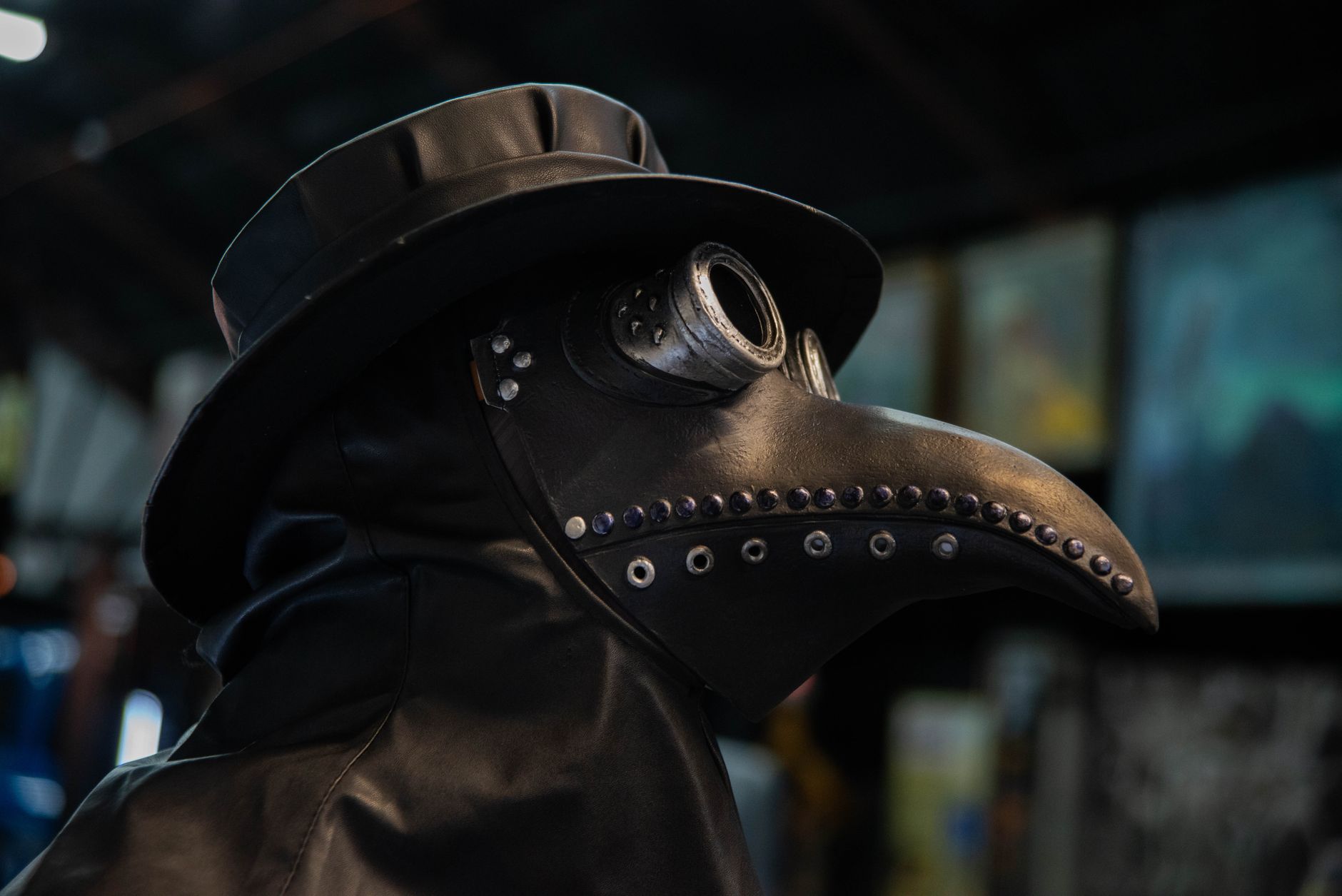
Photo by u0410u043bu0435u043au0441u0430u043du0434u0440 u041bu0438u0447 on Pexels.com
As Nevare continues to endure the illness, he notes the rotating presence of members of his cohort in the sickbeds near his. He also dreams, somewhat lucidly, of Tree Woman and the workings of her magic. The vector through which the plague spreads is noted, as does the means by which the Dappled People make themselves immune to it, and Nevare raves in his continuing fever about the lies spoken about him. More dreams follow, many of which center on Nevare’s shames and fears or show him the progress of the Gernian dead to Tree Woman’s harvest.
Nevare wakes at one point to discussion of the continued plague. He wakes at another to overhear argument over how the dead are to be treated. And he finds himself dying at one point, joining the parade of Gernian souls across the bridge that he had erected (see “Crossing the Bridge”). He recoginzes a number of figures amid it, and he is beginning to cross, himself, and observes much before Tree Woman expels him back into his own body. He wakes, then, to find Epiny attending him, and she reports to him the events of Dark Evening from her perspective, including the break from her family that they prompted. She notes, too, that the Academy has remained the epicenter of the plague, still roiling with it even as the surrounding areas have largely cleared the disease.
As they confer, Nevare realizes the extent to which Epiny is bound to Spink, and Spink, lying nearby, begins to die. His death drags him towards the bridge, pulling Epiny along. Nevare follows, drawn back towards death by magic. And in the liminal world of the not-quite-dead, he fights against his alternate self and against the magics that ensnare him, his cousin, his friend, and others. With substantial effort, he manages to free first Caulder, then others in sequence, and he retrieves the weapon he had left behind years ago, using it to cut the bridge he had once built. Demanding that Tree Woman return Epiny and Spink to themselves, Nevare attacks her, wounding her, and she expels him from the liminal realm violently.
To address the chapter-length issue: the present chapter, in the edition of the novel I’m rereading, runs 30 pages in length, approximately 5.08% of the novel. Hobb’s back-loading is on full display in it; although the next-to-last chapter, it has a lot going on, resolving major points that call back to “Crossing the Bridge.” There is not so much structural symmetry going on as has been the case, but it is the case that asymmetry prompts a feeling of motion through works of art; the lack of symmetry is not a flaw.
Also, for indexing purposes, the following: Carsina Grenalter, Caulder Stiet, Colonel Stiet, Dappled People, Daraleen Burvelle, Dark Evening, Dewara, Dr. Jakib Amicas, Epiny Burvelle, Eron, Gernian, Gettys, Gord Lading, Keft Burvelle, Kidona, King’s Cavalla Academy, Natred Verlaney, Nevare Burvelle. Old Thares, Oron, Plague, Rory Hart, Scout, Sefert Burvelle, Sergeant Rufet, Speck, Spinrek “Spink” Kester, Swanneck, Tree Woman, Trist Wissom. There is in the present chapter a more intense focus on fewer characters and places; the greater intensity suggests greater narrative importance that the deep echo of events in the chapter and the narration itself bear out.
A note of interest: Nevare remarks that the alternate self of him Tree Woman has made “loved the [Dappled] People as I had never loved my own kind” (536). Throughout the novel, Nevare makes much of his perceived duties, although he often fails in their execution, both in their letter and in their spirit. He seems throughout to be seeking approval, an “attaboy” for fulfilling his expected role, and while that is not necessarily inexcusable in a youth, it is something that bespeaks a mismatch between his authentic self and the performative persona he seeks to display and to instantiate. That is, he is not the role for which Gernian society intends him (nor that for which Dewara or Tree Woman did), even if he wants to be the role. Maw’s repeated offer (see “Letters from Home” and “Crossing”) speaks to some awareness of others of that truth. In fits and starts, Nevare seems to be growing aware of that truth, himself. It is sensible enough; he is still becoming an adult, whatever his legal status may be, and such becoming is rarely linear or abrupt. There’s another scholarly someday in there, I’m sure.
The plague, as described, seems akin to typhoid or something similar (such as cholera, previously mentioned in regards to “Sword and Pen”).* The symptoms presented, as well as the rapid spread and the vector of infection–the dust of the Dust Dance is powdered feces–are suggestive of the comparison. Too, there are historical parallels to be found; the nineteenth-century United States that Gernia echoes had no few outbreaks of the disease, including notably in Chicago, and what I remember from history classes (with apologies that I cannot give more specific citation; it has been more than twenty years since I had a US history course) tells me that there were more casualties in the US Civil War caused by typhoid and similar diseases than by combat. As might be expected, the parallels are inexact. Gernia is not the United States, of course, and its history is not the history of the readers’ world. Too, the plague, while acting in some ways like observable diseases (including offering an innoculation after the manner of early vaccines), is clearly also enhanced by supernatural means. But it is rooted enough in known facts of the readers’ world that it rings of the verisimiltude Hobb reports prizing.
To shift: like others, I’ve pointed out some comparisons between Nevare and Fitz. For examples, see “Magic and Iron,” and “Journey,” as well as “Crossing the Bridge,” “Sword and Pen,” and “Carnival,” already linked above. Narrative perspectives and introduction, as well as narrative dislocations and disjunctions related to illness, injury, and immersion in magic all come to mind–along with a telling haircut at a similar point in the texts. The present chapter adds another parallel between them, imperfect as it is: like Fitz, Nevare dies and gets better. In the present chapter, owing to a combination of illness and the invocation of a familiar (borrowed**) magic, Nevare finds his sould separated from his body and following along with many others in similar straits, no few of whom are consumed by Tree Woman and her agent. This is not entirely dissimilar from what Fitz experiences at the end of Royal Assassin and the beginning of Assassin’s Quest, although, again, there are differences to be found–not least of which is the relative lack of depiction of an afterlife at that point.† The earlier occurrence for Nevare also bears attention; how the characters concerned address their relative experiences, continued rereading will make clear.
I look forward to doing it.
* I note with some interest that the fact of plague comes up repeatedly in Hobb’s work. The Blood Plague reported in the Realm of the Elderlings novels comes to mind no less than the Speck plague of the current series–and there is nearly off-hand mention of a pox epidemic in living memory in the present chapter, as well. Again, I stumble into more scholarly somedays.
** The topic of the borrowed magic is broached in “Séance,” to some effect. Interaction with colonialist tropes and postcolonial criticism suggests itself as yet another scholarly someday to pursue, to the extent that Helen Young has not already done it.
† That lack, as well as the ways in which Hobb comes to address post-death experience (as witness “Sites of Memory in Robin Hobb’s Realm of the Elderlings,” “Smoke” in Assassin’s Fate, and others), informs my assertion during the discussion following a 2024 conference presentation (of which I make some remark here) that Hobb’s motion away from the Tolkienian tradition is a progression. Like most of us, she figures some things out as she goes along.
One more chapter to go in this, then more to come after. Get your writing in line; fill out the form below!


[…] Read the previous entry in the series here.Read the next entry in the series here. […]
LikeLike
[…] the previous entry in the series here.Read the next entry in the series […]
LikeLike
[…] also of the Dappled People (see not only “Crossing the Bridge,” but also and especially “Plague.”). He has no reason to be doubtful on approach, and he finds himself believing in it as his […]
LikeLike
[…] again, Hobb repeats chapters, this time from Shaman’s Crossing‘s 23rd chapter. As ever, one thing that suggests itself to a critical reading (and I do harbor some pretense that […]
LikeLike